The modern retail landscape in Australia has fundamentally changed. Today’s customer journey fluidly moves between online and offline worlds, and their expectation is for a seamless, engaging, and personalised experience wherever they go. This shift requires retailers to think of their physical stores not just as places of transaction, but as dynamic media hubs.
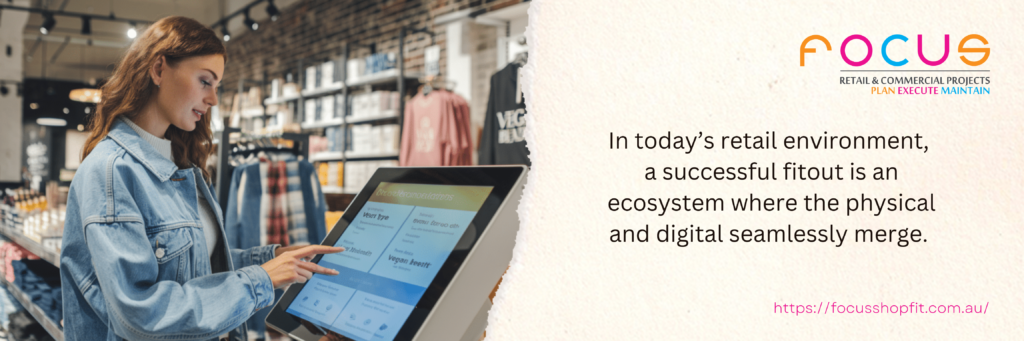
Integrating retail technology has become a critical component of modern shopfitting and a key to creating a relevant and future-proof customer experience. In today’s retail environment, a successful fitout is an ecosystem where the physical and digital seamlessly merge.
How digital displays change in-store communication
The most visible aspect of this integration is the use of digital displays into retail fitouts in Australia. However, the strategy goes far beyond simply hanging a television screen on a wall. It involves a thoughtful approach to how technology can solve problems, enhance branding, and create memorable moments for your customers.
When planned correctly, digital displays can revolutionise the way you communicate with your customers inside your store. Their flexibility and dynamic nature offer significant advantages over traditional static signage.
- Dynamic signage and brand storytelling: Instead of costly and wasteful printed posters, digital screens can showcase an endless loop of promotions, new arrivals, and lifestyle videos. A fashion boutique can display footage from a runway show, while an outdoor adventure store can show stunning videos of its products in action. This creates an immersive atmosphere that captures attention and communicates the brand’s story far more effectively than a static image ever could.
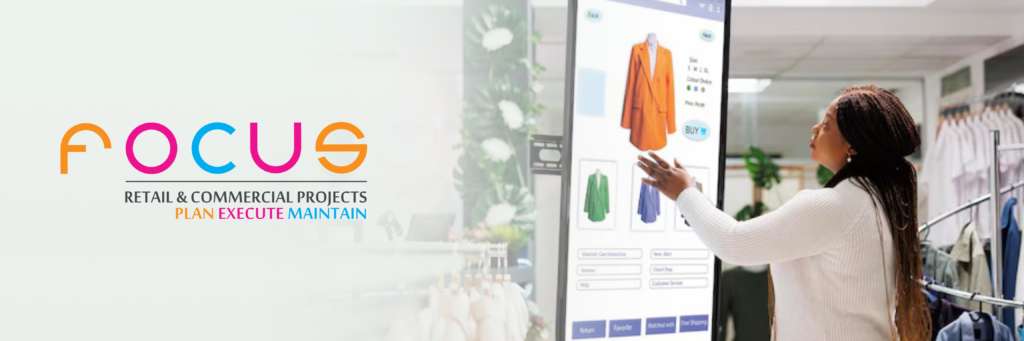
- Interactive kiosks and the endless aisle: A common challenge for physical stores is limited floor space. Interactive kiosks effectively solve this by providing an “endless aisle”. Customers can use a touchscreen to browse your entire product catalogue, check stock levels in other stores, or even place an order for home delivery. This integration of e-commerce within the physical store prevents lost sales and provides a valuable customer service tool.
- Video walls for high-impact experiences: For a true ‘wow’ factor, nothing beats a large-scale video wall. Placed at the entrance or behind the main counter, a video wall can serve as a powerful architectural feature and a stunning backdrop. It can display abstract atmospheric content, bold branding, or even synchronised marketing campaigns, creating a memorable and highly shareable focal point in your store. The planning of such features is a key part of modern shopfitting.
Why technology must be planned early
One of the biggest mistakes retailers make is treating technology as an add-on after the fitout is complete. This inevitably leads to messy cables, awkward placement, and compromised functionality. Successful integration of retail technology must be planned from the earliest stages of the design process.
As we note in our guide on preparing your retail store before shopfitting, a detailed plan is essential. Your shopfitter needs to account for critical infrastructure requirements. This includes running sufficient power and data cabling to all the right locations, ensuring there is adequate ventilation for hardware that generates heat, and incorporating the necessary structural supports in walls and ceilings to safely mount heavy screens. Companies like Samsung and LG are constantly innovating in this space with thinner and lighter commercial displays, but the core infrastructure needs remain.
Smart store systems that improve operations
A truly smart store uses a range of technologies working in concert. While digital displays are customer-facing, other tech works behind the scenes to improve efficiency and gather valuable data.
- People counters and analytics: Small, discreet sensors at your entrance can provide invaluable data on foot traffic patterns. This helps you understand peak hours, measure the effectiveness of marketing campaigns, and make data-driven decisions about staffing.
- Modern point of sale (POS) systems: Clunky, stationary cash registers are a thing of the past. Modern POS systems are often tablet-based, allowing staff to process transactions from anywhere on the floor, reducing queues and creating a more personal checkout experience.
- Augmented reality (AR): For industries like fashion and beauty, AR is a game-changer. “Magic mirrors” can allow customers to virtually try on different outfits or makeup looks, creating a fun, interactive, and highly personalised experience. As reports from firms like McKinsey & Company show, AR is becoming a significant driver of customer engagement.
Bringing physical and digital together
The future of retail is a thoughtful blend of physical and digital. The team at Focus Shopfit has the expertise to help you plan and execute a modern shopfitting project that seamlessly integrates the technology you need to thrive.
Looking to create a future-proof retail experience that engages and excites your customers? We are here to help! Reach out to our team through our contact page to discuss how we can integrate cutting-edge technology into your next fitout.