In the Australian retail environment, a store’s layout is often judged by its curb appeal. But true success hinges on something far less visible: the efficiency and safety of the staff working behind the scenes. Professional shopfitting is the key to creating a space that not only looks fantastic but also functions as a safe, ergonomic, and high-performing workplace.
Ignoring staff workflow and safety in the retail fitout phase is a costly mistake. It leads to slower service, higher rates of absences due to injury, and ultimately, a poorer customer experience. Australian business owners have a legal obligation under Work Health and Safety (WHS) laws to minimise risk and a smart fitout makes meeting this requirement simple and profitable.
- Ergonomic design at the point of sale (POS)
The checkout counter is a high-traffic, repetitive task zone where staff spend hours on their feet. If the design is flawed, repetitive strain injuries (RSIs) are inevitable.
A professional shopfitting team focuses on ergonomics:
- Optimal counter heights. Counters should be designed to reduce excessive reaching, bending, or twisting, accommodating a variety of staff heights. Adjustable height counters are an excellent investment, though fixed counters must be planned carefully with suitable anti-fatigue mats.
- Integrated technology. POS screens, scanners, and EFTPOS terminals should be recessed or angled to prevent glare and placed within the staff’s neutral reach zone. This minimises shoulder strain and repetitive movement.
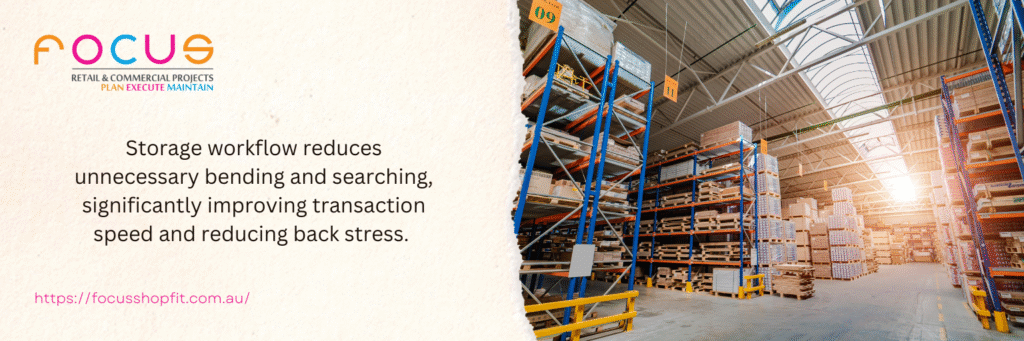
- Storage workflow. All frequently used items—bags, receipt paper, and security tags—must be stored directly under the counter in easily accessible, lightweight drawers. This reduces unnecessary bending and searching, significantly improving transaction speed and reducing back stress.
Tip: During the design phase, simulate a typical transaction motion with your shopfitting team to ensure every item and piece of equipment is placed for maximum flow and minimum strain.
- Streamlining back-of-house and stock movement
The stockroom is where many serious retail injuries occur—trips, falls, and muscle strains from lifting. A well-designed back-of-house area is essential for reducing risk and improving staff workflow.
- Clear pathways and lighting. Stockroom aisles must be wide, clear, and brightly lit to prevent trip hazards. Storage systems should be clearly labelled, promoting efficiency and preventing staff from needing to climb over items.
- Vertical storage solutions. Utilise durable, adjustable vertical shelving that is designed for commercial loads. Heavy items must be stored at waist height or below to comply with safe manual handling practices. Install safe, sturdy ladders or step stools in logical places for accessing higher stock, rather than relying on unstable chairs.
- Dedicated receiving area. The space where deliveries are unpacked must be separate from the main stock storage. This ensures boxes and pallets aren’t blocking fire exits or emergency paths, a crucial WHS compliance measure.
- Change room and display safety
Even customer-facing areas can pose staff risks if not planned correctly. Change rooms require durable, secure retail fitout components that withstand heavy use and minimise maintenance issues that could harm staff.
- Secure fixtures. Mirrors, hooks, and benches in change rooms must be securely mounted to Australian standards. A mirror or bench that becomes loose poses an immediate safety hazard.
- Safe display access. For high displays or tall shelving, ensure safe and integrated access solutions are planned. This might involve custom-built rolling ladders that lock into place or specific areas designed to accommodate scissor lifts safely during setup. Never rely on staff using unsecured chairs or boxes to merchandise.
By prioritizing safety and staff workflow from the outset, the retail fitout becomes a long-term asset. It protects your team, keeps your business compliant with WHS laws, and ultimately allows your staff to focus on delivering the excellent service that drives sales.
True quality in Australian retail design is measured not just by the customer’s visual impression, but by the health and efficiency of the team running the store. Investing in ergonomic counters, clear stock movement paths, and safe display access through professional shopfitting is the smartest way to reduce injury risk and ensure seamless staff workflow for years to come. Contact Focus Shopfit today for a WHS-focused design audit and consultation to improve the ergonomics of your current retail fitout.