
A look inside a high-end medical fitouts in Perth
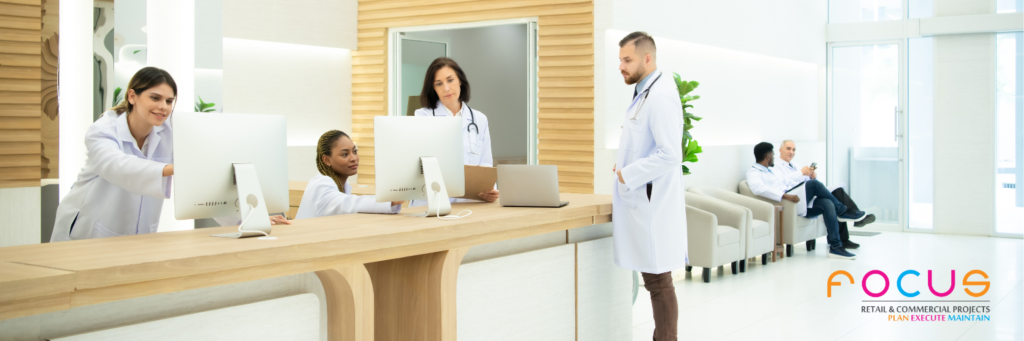
A high-end clinic is more than a polished reception desk and a clean colour palette. The best spaces feel calm, intuitive, and efficient for both patients and staff, even when the schedule is packed.
Across Perth, healthcare providers are investing in layouts and finishes that support trust, privacy, and seamless patient flow. These details are what set premium medical fitouts in Perth businesses commission apart from basic refurbishments.
This guide walks through what you would typically find inside a well-executed clinic fitout, plus the planning choices that make the space work in day-to-day operations. It is designed to be practical, so you can use it when briefing your designer, builder, or landlord.
What makes a medical fitout feel high-end
Luxury in a clinic is not about being flashy. It is about creating a space that feels safe, quiet, and well-managed. Patients notice simple signals like a clear check-in area, comfortable lighting, and privacy at the front desk. Staff notice different signals, such as storage that is actually accessible, consult rooms that support workflow, and back-of-house zones that prevent congestion. Great healthcare design often looks effortless because the hard thinking happened during clinical fitout planning.
Zoning that protects privacy and keeps flow efficient
One of the biggest differences between average and premium fitouts is zoning. A high-end clinic is typically organised around a simple question. What should a patient see, hear, and experience at each step of their visit? A strong zoning plan usually separates public areas from clinical areas and staff-only routes. That can include a reception and waiting space designed to reduce crowding, consultation rooms that feel private, and staff movement paths that do not cut through patient zones.
If you are designing for multiple services, zoning also supports clearer wayfinding. It helps patients arrive at the right room without feeling lost, rushed, or exposed.
Reception design that balances welcome and confidentiality
Reception is often the most emotionally loaded part of the clinic experience. People may arrive anxious, unwell, or time poor. A premium reception zone reduces friction from the first interaction. This can involve a check-in point that avoids direct eye contact with the waiting area, acoustic treatments that soften voices, and seating layouts that reduce face-to-face crowding. In terms of finishes, premium clinics often prefer durable surfaces that still feel warm, such as textured laminates, engineered stone, and joinery details that avoid a sterile look while remaining easy to maintain.
Consult rooms designed around real clinical tasks
A consult room should support the work, not force the clinician to adapt. High-end clinics design each room around the procedures and equipment used daily, then refine the details for patient comfort. This is where clinical fitout planning becomes a cost saver. When power points, sink locations, equipment storage, and staff circulation are mapped early, you reduce rework and protect your programme.
Many providers also choose consistent room layouts across consult rooms. This supports staff training, reduces errors, and makes supplies easier to manage.
Lighting that supports comfort and clinical accuracy
Lighting is a major part of patient comfort and clinical visibility. Premium medical fitouts in Perth clinics typically use layered lighting so each space can shift between calm ambience and practical task clarity. That may include softer ambient lighting in waiting areas, focused task lighting in treatment rooms, and glare control near mirrors and glossy surfaces.
For broader guidance on safe and functional health facility layouts, the Australasian Health Facility Guidelines are a useful reference for room planning and healthcare project considerations.
Finishes that look premium and stay practical
In healthcare, finishes must handle cleaning, traffic, and wear. The premium difference comes down to choosing materials that perform under pressure while still looking refined. Common upgrades include more resilient flooring transitions, wall protection in high-contact zones, and joinery detailing that hides gaps where dust collects.
If you are weighing finish tiers and how they affect your project budget, this 2026 shopfit cost guide is a helpful benchmark for comparing outcomes across different investment levels.
Back-of-house spaces that protect staff time
High-end clinics often invest more in areas patients never see, because that is where staff efficiency is won or lost. Storage, staff rooms, clean utility areas, and admin zones reduce bottlenecks and support consistent service delivery.
A well-designed storage wall, for example, can remove dozens of small interruptions across a day. It also improves inventory control and reduces visible clutter in consult rooms. This level of detail is easiest to deliver when the site is managed as a coordinated project. Focus Shopfit’s team takes a structured approach to project-managed fitout delivery, so clinical layouts and services coordination stay aligned during installation.
Compliance and accessibility planned from the start
Premium outcomes come from fewer late changes. Accessibility, fire safety scope, and service requirements should be addressed early, particularly where tenancy conditions or centre rules may affect the build.
For businesses that want to understand the documentation that usually sits alongside commercial works, the overview on permits, zoning, and approvals provides a plain-English snapshot of common triggers.
A premium patient experience is built in small moments
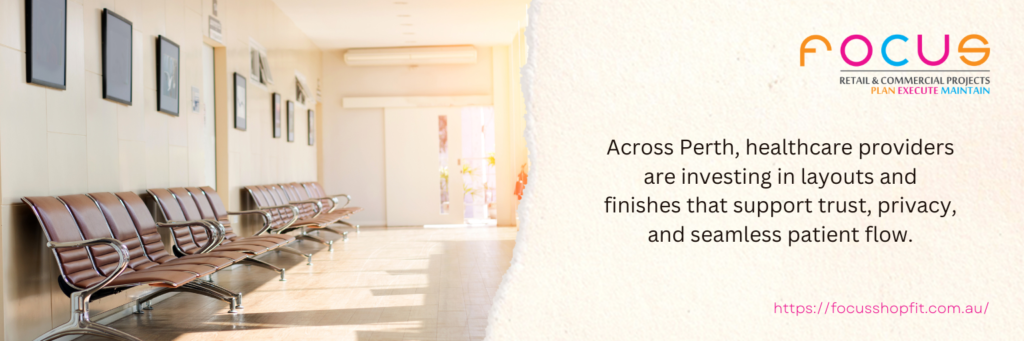
The final difference comes down to touchpoints. It is the quiet waiting area layout, the well-placed signage, the door hardware that feels solid, and the acoustics that stop consult conversations travelling. In modern healthcare design, these choices support brand trust just as much as clinical capability. Patients may not describe every detail, but they feel the difference immediately.
When you approach medical fitouts in Perth clinics commission with a patient-led lens and a staff-led workflow plan, you create a space that performs over time, not just on opening day.
If you are planning a new clinic or upgrading an existing space, Focus Shopfit can help you translate your service model into a buildable fitout plan. Get in touch via the contact page to discuss timelines, scope, and the level of finish that suits your brand.

The role of custom joinery in Perth to create a unique retail space
In the world of retail, differentiation is everything. With countless stores competing for attention, creating a distinct and memorable brand experience is paramount. While product, service, and marketing play their parts, the physical environment of a store is the stage where the brand story comes to life.
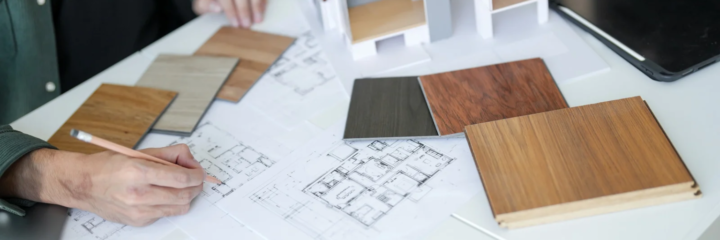
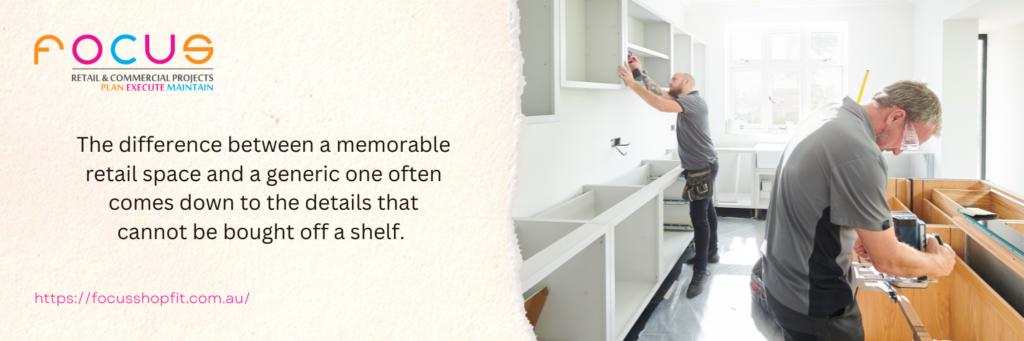
This is where custom joinery in Perth makes its entrance, transforming a standard retail space into a bespoke, functional, and deeply personal brand statement. The difference between a memorable retail space and a generic one often comes down to the details that cannot be bought off a shelf.
Unlike flat-pack or mass-produced fixtures, bespoke shopfitting involves designing and crafting items specifically for a single space and purpose. It is a collaborative process between a business owner and a skilled shopfitter to create pieces that are perfectly tailored to the brand's aesthetic, operational needs, and customer journey. From a unique point-of-sale counter to intricate product displays, custom joinery is the key to unlocking a store's true potential.
Built for your tenancy, not a standard floor plan
While the visual impact of custom work is its most obvious benefit, its functional advantages are just as powerful. Standard fixtures are designed for average spaces and average needs, which rarely exist in reality. Bespoke shopfitting solves the unique challenges and capitalises on the unique opportunities of your specific tenancy.
One of the greatest strengths of custom work is its ability to maximise every square centimetre of your floor plan. Retail spaces often have awkward corners, low ceilings, or structural columns that can disrupt the flow and create dead zones. Custom joinery can turn these liabilities into assets. An oddly shaped corner can become a perfectly fitted wrap-around display unit, while the space under a staircase can be transformed into elegant, integrated storage. This meticulous space planning is a core tenet of effective retail design.
Displays that match your product and improve sales flow
Furthermore, custom joinery allows for the creation of product displays that are perfectly suited to what you sell. A jeweller requires shallow, well-lit, and secure displays, while a boutique clothing store needs a combination of hanging space, shelving, and feature tables. With custom solutions, you can specify the exact dimensions, materials, and integrated lighting needed to make your products shine. This level of detail ensures your merchandise is presented in the best possible way, directly impacting customer perception and sales. It also significantly improves the daily operations for your team, a concept explored in our article on shopfitting for staff workflow and reducing injury risk.
Joinery as a brand storytelling tool
Your retail fitout is a three-dimensional story, and custom joinery provides the narrative detail. The materials, shapes, and finishes you choose can communicate your brand's values without a single word. A brand focused on sustainability, for instance, can use reclaimed local timber in its joinery, creating an immediate and authentic connection to its ethos. You can find inspiration for these unique material choices in Australian design publications like The Design Files.
This storytelling extends to the subtlest details. The precise curve of a reception desk, the unique pattern routed into a wall panel, or the seamless integration of your brand's logo into a shelving unit are all elements of bespoke shopfitting that build a cohesive and memorable brand world. This is what separates a simple transaction from a genuine brand experience. The team at Focus Shopfit works closely with clients to translate their brand identity into tangible, beautifully crafted joinery that serves as a powerful focal point.
Long-term value that holds up in busy retail environments
Custom joinery in Perth indeed requires a greater upfront investment than off-the-shelf alternatives. However, it should be viewed as a long-term investment in your brand's durability and appeal. Mass-produced furniture is often made with lower-quality materials and designed to fit fleeting trends. Custom joinery, by contrast, is built to last. Crafted by skilled tradespeople using high-quality, durable materials, these pieces are designed to withstand the rigours of a commercial environment for years to come.
This durability translates into a lower total cost of ownership, as you will not need to frequently repair or replace worn-out fixtures. As we discuss in our guide on how to maintain your store's fitout, quality construction is the first step towards longevity. Moreover, a well-designed custom piece has a timeless quality that will not look dated in a few years, ensuring your investment continues to pay dividends in brand perception and functionality.
Creating a space that feels uniquely yours
Your retail space deserves to be as unique as your brand. By embracing custom joinery, you move beyond the generic and create an environment that is not only beautiful and functional but also a true reflection of your vision.
If you are ready to explore how custom joinery can elevate your retail space, the team at Focus Shopfit is here to help. We specialise in creating unique, high-quality bespoke pieces that bring brands to life. Contact us today to schedule a consultation and start your design journey.

The modern workspace: Trends in Perth for office fitouts 2026
Office expectations have shifted. By 2026, the workplace is less about desks in rows and more about creating an environment that supports how people actually work across the week. For businesses planning office fitouts in Perth teams will genuinely enjoy using, the focus is on flexibility, wellbeing, sustainability, and seamless tech.
For Perth organisations competing for talent and aiming to lift productivity, the fitout becomes a practical business asset. Here are the trends shaping commercial office design in 2026, and how to apply them without overcomplicating the brief.
Trend 1: Designing for hybrid work as the default
In 2026, many teams are operating with a blend of onsite and remote time. The best-performing hybrid workspaces are designed around activity, not attendance.
Practical design moves that support hybrid working include:
- Zoning that matches tasks, such as quiet focus areas, project spaces, and meeting rooms sized for real demand
- A stronger mix of enclosed rooms and semi-enclosed nooks to support calls and deep work
- More “touchdown” positions for short onsite visits, plus a smaller number of permanent workpoints for regular onsite roles
- Storage that supports desk sharing, including lockers and team-based storage near collaboration zones
This approach helps your workplace stay functional on high-traffic days while still feeling purposeful on quieter days.
Trend 2: Flexible layouts that change with teams
Workflows evolve, teams grow, and departments reorganise. In 2026, successful fitouts are designed to adapt with minimal disruption.
Flexibility can be built in through:
- Modular furniture and joinery that can be reconfigured without major building work
- Demountable partitions that allow changes to rooms and team zones
- Power and data planning that anticipates future desk layouts and meeting room needs
- Multi-purpose rooms that can shift between training, collaboration, and town hall use
When you plan flexibility early, your fitout stays relevant longer. This is especially valuable for organisations doing office fitouts for Perth businesses are using to support growth or consolidation.
Trend 3: Wellbeing-led design that feels measurable
Wellbeing has moved beyond a nice-to-have. It now influences retention, performance, and how people rate their workplace experience.
Key wellbeing priorities that are shaping modern fitouts include:
- Better acoustic control so people can focus and meetings stay contained
- Lighting that supports concentration while reducing glare and fatigue
- Air quality strategies aligned with healthier indoor environments
- Ergonomic planning that supports different body types, working styles, and accessibility needs
Acoustics is one area that often delivers immediate results. Even simple improvements can reduce distractions in open-plan zones. If you want practical ideas you can apply in non-retail environments too, Focus Shopfit’s article on using acoustic design to enhance the retail experience is a helpful starting point because the same core principles apply in many commercial settings.
For ergonomics guidance relevant to office teams, WorkSafe WA’s overview on office ergonomics provides clear direction that can inform workstation and layout decisions.
Trend 4: Sustainability that supports long-term value
Sustainability is increasingly tied to tenant expectations, corporate responsibility goals, and operational cost control. In 2026, sustainability is also about resilience and smarter lifecycle decisions.
Ways fitouts are becoming more sustainable include:
- Selecting finishes and materials with stronger durability so they stay presentable longer
- Designing for maintenance access, which reduces downtime and avoids patchwork repairs
- Re-using elements where practical, such as existing partitions or upgradeable joinery
- Choosing products and systems that reduce waste during future changes
If you’re working towards a recognised benchmark for fitout sustainability, Green Building Council of Australia’s Green Star – Interiors is a useful reference point for understanding how sustainable fitout outcomes are assessed.
Trend 5: Tech-ready spaces that reduce friction
Technology should support work without becoming the centre of attention. In 2026, commercial spaces are being planned to make meetings smoother, improve space use, and support flexible teams.
Common tech-forward considerations include:
- Meeting rooms designed for hybrid calls, with camera placement and acoustics considered from day one
- Stronger wireless performance planning across the full floorplate, including collaboration and breakout zones
- Smarter access control and secure storage for shared environments
- Planning for building systems that connect through the Internet of Things (IoT), where appropriate, so lighting, occupancy, or energy use can be monitored and improved over time
The best results come from coordinating information technology (IT) needs with spatial planning early, so power, cabling, and room layouts support the tools people already use.
Trend 6: A fitout process that stays predictable
Trends matter, but delivery still determines success. A modern office fitout should feel clear from brief through handover, including timelines, approvals, and how changes are managed.
For organisations looking for a structured approach to delivery, Focus Shopfit’s service outlines a practical way to move from plan to build with fewer surprises and stronger coordination across trades.
A well-run process also makes it easier to keep design decisions aligned with budgets, especially when you are balancing aesthetics with performance in commercial office design.
Bringing it together for Perth workplaces
When you combine flexibility, wellbeing, sustainability, and practical tech planning, the result is a workspace that supports real work patterns. The goal for 2026 is a workplace people choose to use because it helps them perform, not because it looks impressive in photos.
If you are planning office fitouts in Perth teams can grow with, start by defining what great work looks like in your organisation, then shape the space around those behaviours. With the right fitout partner, you can make those decisions confidently and keep delivery on track.
Ready to plan a modern office that works as hard as your team does? Speak with Focus Shopfit about your next fitout and contact us here.
On how experienced shopfitters help retail stores adapt to modern technology
In today’s retail landscape, the integration of modern technology into store design has become a critical factor in attracting and retaining customers. Retailers must not only keep up with constantly changing consumer demands but also ensure their stores are equipped with the latest technology to provide a seamless shopping experience. This is where retail shopfitters play a crucial role. Shopfitters help retail businesses bridge the gap between traditional store layouts and tech-savvy innovations, creating a harmonious environment that enhances customer engagement.
As a leading retail shopfitting service provider in Australia, Focus Shopfit specialises in helping stores implement modern technology while maintaining functional and aesthetically pleasing spaces.
In this blog, we’ll explore how shopfitters assist retail stores in adapting to modern technology and staying competitive in the digital age.
The role of shopfitters in modern retail environments
Shopfitters are design strategists who understand the complexities of retail space planning, customer behavior, and the technological needs of modern stores. Whether it’s integrating smart displays, upgrading store fixtures, or optimising the overall layout, shopfitters ensure that a store’s infrastructure supports the latest technology trends.
1. Smart displays and interactive technology integration
One of the most significant ways modern technologies have changed the retail industry is through the use of smart displays and interactive touchpoints. These technologies engage customers directly, offering them personalised experiences, product information, and even the ability to make purchases right from the display.
Interactive touchscreens: Many retailers are using touchscreens as part of their shop display equipment to allow customers to browse products, check prices, or access additional information without assistance from staff. Shopfitters ensure these touchscreens are strategically placed in high-traffic areas, making them convenient for customers to use.
Digital signage: In addition to interactive displays, shopfitters help retail stores install digital signage, which can be updated in real-time to display promotions, product information, or interactive content. This not only modernises the shopping experience but also allows retailers to change messaging without the need for new printed materials.
2. Optimising retail store fixtures for technology
Shopfitters work closely with retailers to design and install fixtures that meet these requirements while maintaining a clean, cohesive aesthetic.
Custom fixtures for smart devices: With more stores implementing mobile point-of-sale (POS) systems, retail store fixtures need to accommodate charging stations, docking areas, and secure storage for these devices. Shopfitters can design fixtures and supplies that seamlessly integrate these elements into counters, shelves, and display units.
Cable management systems: As more technology is integrated into retail spaces, the risk of unsightly and potentially dangerous cables increases. Shopfitters offer solutions such as custom shop display furniture with built-in cable management systems to keep cables hidden and organised, ensuring both safety and visual appeal.
3. Future-proofing retail spaces with modular design
Technology evolves rapidly, and retailers need to be prepared to upgrade or replace systems without costly overhauls of their store layouts. This is where modular design comes into play, and it’s an area where Focus Shopfit excels.
Modular shop displays: Shopfitters design and build modular shop display furniture for sale that can be easily reconfigured or expanded as technology needs change. For example, shelving units or counters can be designed to accommodate future digital displays or additional smart devices, making it easier to adapt the store to technological advances.
Scalable retail fixtures: Retailers often look for retail store fixtures near me that offer flexibility and scalability. Shopfitters provide solutions such as modular shelving systems that can be expanded or adjusted without requiring a complete redesign of the store. This flexibility ensures that retailers can adapt to new technologies as they become available.
4. Enhancing customer experience with technology-driven layouts
Shopfitters play a vital role in ensuring that modern technology enhances the customer experience rather than detracting from it.
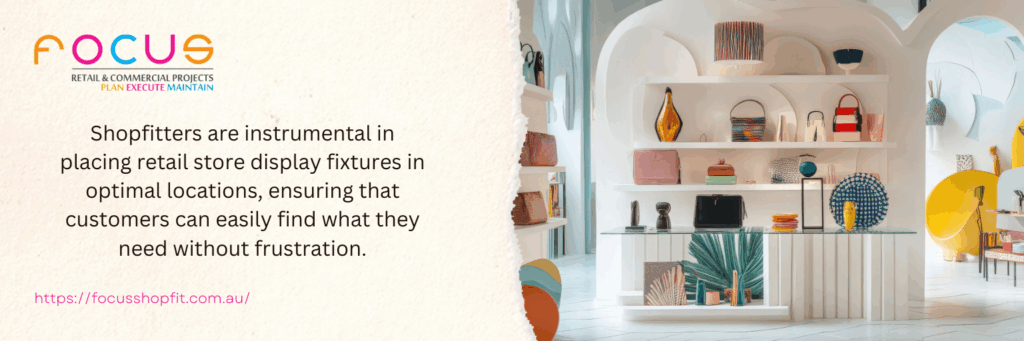
Wayfinding technologies: With the rise of larger retail spaces, many stores are implementing wayfinding technologies, such as digital kiosks or interactive maps, to help customers navigate the store. Shopfitters are instrumental in placing these retail store display fixtures in optimal locations, ensuring that customers can easily find what they need without frustration.
Seamless checkout experiences: As more retailers adopt cashless and mobile payment systems, retail shopfitters help design checkout areas that accommodate new technologies while maintaining an efficient flow of traffic. For example, shopfitters can install custom shop display furniture that integrates mobile payment stations, reducing wait times and improving the overall customer experience.
5. Sustainable shopfitting solutions for modern technology
As retailers embrace technology, there’s also a growing demand for sustainable shopfitting solutions. Shopfitters are responding by incorporating eco-friendly materials and energy-efficient technologies into their designs.
Energy-efficient lighting: One of the most common technological upgrades is energy-efficient LED lighting. Shopfitters not only install these systems but also ensure that they are strategically placed to highlight key areas such as product displays, promotional zones, and checkouts. This not only reduces the store’s carbon footprint but also enhances the visual appeal of the store.
Recycled and eco-friendly materials: Shopfitters today are incorporating sustainable materials like recycled wood and metals into their retail shop fittings in Perth. These materials help reduce the environmental impact of store design while providing retailers with unique, visually appealing shop display equipment.
6. Security and loss prevention technologies
Modern technology plays a key role in loss prevention and security, and shopfitters help retailers integrate these systems into their store designs.
Smart security cameras and sensors: Today’s security systems often include smart cameras and sensors that can monitor customer activity in real time and detect unusual behavior. Shopfitters design retail store fixtures that discreetly house these devices, ensuring that they blend seamlessly into the store’s aesthetics while providing full coverage.
Electronic article surveillance (EAS) systems: EAS systems are essential for preventing theft in many retail environments. Shopfitters work with retailers to install these systems in a way that is both effective and visually unobtrusive, often integrating sensors directly into retail store display fixtures or entryways.
7. Adapting to e-commerce and omnichannel retailing
The rise of e-commerce and omnichannel retailing means that physical stores must adapt to serve both online and offline customers seamlessly. Shopfitters help retailers create spaces that support omnichannel strategies, ensuring a consistent customer experience across all touchpoints.
Click-and-collect areas: Many retailers are adopting click-and-collect services, where customers can order online and pick up in-store. Shopfitters design designated areas with shop display furniture that is easy to access and navigate, ensuring a smooth customer journey from online to offline.
Integrated e-commerce displays: Shopfitters also help retailers blend their online and offline experiences by designing retail store display fixtures that feature QR codes or digital displays linked to the retailer’s e-commerce platform. This allows customers to browse products in-store while having the option to purchase online, offering greater flexibility.
At Focus Shopfit, we specialise in creating custom solutions for retailers looking to stay ahead of the curve. Whether you’re seeking sustainable materials for your retail shop fittings in Perth or looking to implement cutting-edge shop display equipment, our team has the expertise to help you design a store that meets your technological needs while enhancing the customer experience.
11 Essential retail design tips from professional shopfitters to boost sales
In the fiercely competitive world of retail, creating a memorable and engaging shopping experience is paramount. The design of your retail space should be more than just aesthetics. It should be a strategic tool that can influence customer behavior, enhance brand perception, and ultimately boost sales.
When shopfitting in Australia, where the retail landscape is as diverse as it is dynamic, standing out requires creativity and practicality. Focus Shopfit’s guide will share essential retail design tips to help you transform your store and elevate your business performance.
1. Understand your target audience
Your retail design should reflect the customers you aim to serve. In Australia's multicultural society, being aware of cultural nuances can make your store more welcoming to a broader audience. Understanding your target audience's demographics, preferences, and shopping habits is the foundation of effective retail design.
Utilise surveys, focus groups, and data analytics to gather insights. Using customer insight tools and social media metrics can provide valuable information about your customers.
2. Create an inviting storefront
Your storefront is the first impression customers will have, and it's important to make it look inviting to passersby. Craft window displays that tell a story or showcase your best products. Change them regularly to reflect seasons, holidays, or promotions. Ensure that your signage, color scheme, and overall façade align with your brand identity. Make sure entrances are accessible to everyone, including individuals with disabilities.
3. Optimise store layout
An optimised store layout not only enhances the shopping experience but also maximises sales potential by guiding customers through high-value areas. Choose a layout that suits your product type and customer flow. Use floor markers or subtle cues like flooring patterns to direct customer flow. Focus Shopfit ensures that your store layout is always made with precision in every fitout.
4. Strategic product placement
Where you place your products can significantly impact their sales performance. Identify areas in your store that receive the most traffic and place high-margin or promotional items there. Display related products together to encourage multiple purchases. Use the ends of the aisles for high-visibility promotions. Products placed at eye level tend to also sell better because they're easily noticed.
5. Effective lighting
Lighting sets the mood and can highlight key areas or products in your store. Adjust lighting intensity and color temperature to match the time of day or to create different moods. It is also useful in highlighting key elements of your storefront at night, extending its appeal beyond daylight hours.
- Ambient lighting provides overall illumination for the store.
- Accent lighting highlights particular products or displays.
- Consider LED lighting to reduce energy costs and environmental impact.
6. Incorporate technology
Modern consumers are tech-savvy, and integrating technology can enhance their shopping experience. Using technology to collect data on customer behavior can inform future design and marketing strategies.
- Digital signage: Showcase promotions, new arrivals, or interactive content with dynamic displays.
- Interactive kiosks: Allow customers to browse products, check inventory, or access additional information.
- Mobile integration: Offer free Wi-Fi and consider developing a store app for personalised offers. Nowadays, providing mobile payment options is also essential in retail stores.
7. Comfortable environment
A comfortable customer is more likely to spend time and money in your store. Clean facilities can significantly enhance the shopping experience as well. Ensuring your store is well-ventilated with a comfortable temperature.
Custom retail fixtures in Perth is an advantage as it can be adjusted according to your store’s needs. Keep aisles free from clutter to allow easy movement, especially for parents with prams or customers with mobility aids. Benches or lounge areas are also elements to consider for larger stores.
8. Regular updates and maintenance
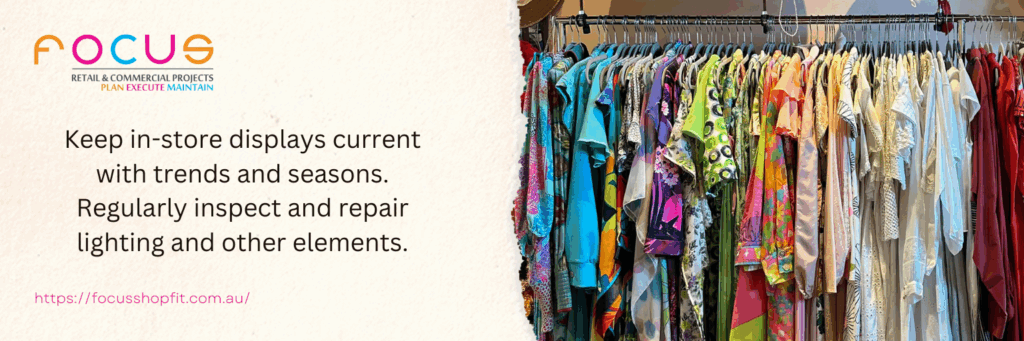
An outdated or poorly maintained store can deter customers. Keep windows and in-store displays current with trends and seasons. Regularly inspect and repair lighting and other elements. Keep an eye on retail design trends, such as sustainable materials or minimalist aesthetics. In addition, soliciting customer feedback on the store environment can help businesses identify areas for improvement.
9. Sensory experience
Engaging multiple senses can create a more immersive and memorable shopping experience. Balance is key to ensuring a positive customer experience.
- Soundscapes: Curate a playlist that aligns with your brand and appeals to your target audience. Upbeat music can energise shoppers, while softer tunes can create a relaxed atmosphere.
- Scents: Pleasant fragrances can enhance the mood and increase the time customers spend in your store. For example, a coffee shop might use the smell of roasted coffee beans to attract customers.
- Texture and touch: Allow customers to feel products or materials. Interactive displays where customers can touch and try products can increase engagement.
10. Accessibility and inclusivity
Designing your store to be accessible to all customers is not only ethical but can also expand your customer base. Incorporate features that accommodate people of all abilities, such as ramps, wide aisles, and accessible restrooms. Using large fonts and high-contrast colors can assist visually impaired customers.
To further enhance this, train your staff to assist customers with special needs and consider offering services like shopping assistance or quiet hours. Regularly review and update your accessibility features to comply with the latest standards and regulations.
11. Stay ahead of retail trends
The retail industry is constantly evolving, and staying informed about the latest trends can keep your store competitive. Blend online and offline experiences by offering services like click-and-collect or in-store online ordering kiosks. Create experiences that go beyond shopping, such as workshops, demonstrations, or events. Use technology to personalise the shopping experience, such as tailored recommendations or offers.
The right design can create emotional connections, foster brand loyalty, and set you apart from competitors. Shopfitting in Australia is not a one-time effort but an ongoing process that evolves with your business and customer expectations. At Focus Shopfit, we're dedicated to helping you navigate this journey.
How to maintain your store’s fitout: Tips to protect your investment
A fresh fitout can transform your store, enhancing its functionality, aesthetic appeal, and customer experience. Whether you’ve just revamped a retail shop, café, or office, your investment deserves proper care to maintain its look and longevity. Without regular upkeep, even the most well-designed fitout can lose its charm over time, costing you repairs, replacements, or dissatisfied customers.
At Focus Shopfit, we recognise the importance of a durable and visually appealing store interior. That’s why we’ve compiled this comprehensive guide to help you maintain your new fitout and keep it looking pristine for years to come.
Your store fitout is a business asset. Here are factors on why maintenance matters:
- Preserve aesthetic appeal. A spotless and well-maintained store enhances customer perceptions of your brand.
- Enhance durability. Shopfitters in Darwin provide proper care that prevents wear and tear, ensuring your fitout lasts longer.
- Cost-effective. Routine maintenance avoids expensive repairs or full-scale refurbishments.
- Compliance. Australian health and safety regulations require businesses to maintain clean and safe premises.
- Boost customer experience: A clean, inviting space encourages customers to stay longer and return often.
Key factors of fitout maintenance
Taking care of your new fitout is an essential part of establishing your brand’s identity and expanding your business. Here are some tips on how you can regularly maintain your retail store.
General maintenance tips
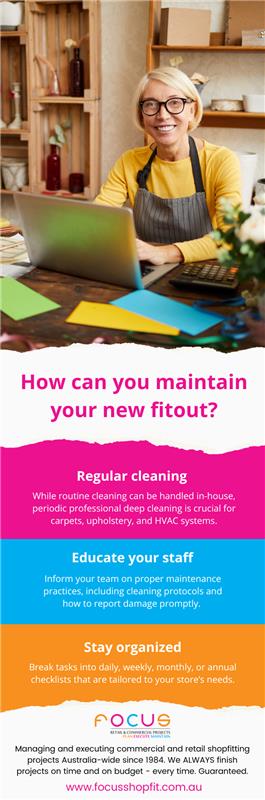
- Develop a routine maintenance plan tailored to your store’s specific needs. Break tasks into daily, weekly, monthly, and annual checklists to stay organised.
- While routine cleaning can be handled in-house, periodic professional deep cleaning is crucial for carpets, upholstery, and HVAC systems.
- High-quality materials are easier to maintain and last longer. If you worked with Focus Shopfit for your fitout, rest assured that you’ve started with durable and premium materials.
- Educate your team on proper maintenance practices, including cleaning protocols and how to report damage promptly.
- Consider partnering with a commercial shopfitting company or a professional maintenance provider who can inspect and repair your fitout as needed.
Check out these area-specific tips to effectively maintain the rest of your shop.
Floors and carpets
- Daily cleaning. Sweep or vacuum your store to remove dirt and debris. For tiled or vinyl flooring, use a damp mop with a pH-neutral cleaner to prevent scratches.
- Spot cleaning. Address spills immediately to prevent stains, especially on carpets or natural stone.
- Periodic deep cleaning. Engage professional services to deep-clean carpets or polish hard floors every six months to a year.
- Protect high-traffic areas. Use rugs or mats in entryways and other high-traffic zones to reduce wear and tear.
Walls and paintwork
- Clean regularly. Wipe down painted walls with a damp cloth or a gentle cleaner to remove dust and smudges.
- Protect corners and edges. Install corner guards to reduce damage in high-traffic areas.
- Repaint as needed. If walls start to look dull or chipped, schedule a touch-up or repainting session every couple of years.

Fixtures and fittings
- Inspect regularly. Check for loose screws, broken hinges, or wobbly fixtures. Tighten or repair as needed.
- Dust and polish. Keep shelving, countertops, and displays free from dust. Use appropriate cleaning products for materials like wood, glass, or metal.
- Prevent overloading. Avoid overloading shelves or displays, as this can cause structural damage over time.
Lighting
- Clean light fixtures. Dust and wipe downlights, lamps, and covers to ensure maximum brightness.
- Replace bulbs promptly. Swap out burnt-out bulbs immediately to maintain consistent illumination.
- Upgrade to LEDs. If you haven’t already, consider using energy-efficient LED bulbs to save on electricity and reduce heat.
HVAC and ventilation systems
- Filter maintenance. Replace air filters regularly to ensure optimal airflow and reduce allergens.
- Inspect for issues. Schedule annual professional inspections to identify and fix leaks, blockages, or inefficiencies.
- Clean vents. Dust or vacuum vents to prevent buildup and maintain clean air circulation.
Glass and mirrors
- Daily cleaning. Use a streak-free glass cleaner for windows, mirrors, and glass display cases.
- Inspect for damage. Look for chips or cracks and repair them promptly to avoid larger issues.
- Tinted windows. If you have tinted glass, follow the manufacturer’s guidelines for cleaning to avoid damaging the film.
Signage and branding elements
- Regular cleaning. Dust and clean signs, both indoors and outdoors, to ensure they’re legible and visually appealing.
- Check for wear. Inspect for fading, peeling, or damage from weather exposure. Replace or refurbish signage when necessary.
- Lighting maintenance. If your signs are illuminated, ensure the lights are functioning and replace any burnt-out bulbs.
Common fitout maintenance challenges in Australia
There are many ways to keep your store from wear and tear, but there will be times when you might experience unavoidable situations. Here are common fitout challenges you might be facing and what you can do when they happen.
Climate concerns
Australia’s varied climate can take a toll on materials. For example, high humidity in coastal areas may lead to mold or rust. Combat this with proper ventilation and moisture-resistant materials.
Pests
Certain areas are prone to pests like termites or rodents. Regular pest control measures are essential.
UV damage
Intense sunlight can fade furniture, signage, or flooring. Install UV-protective films on windows to minimise this risk.
This guide can help protect your fitout investment, keep your store looking its best, and continue to impress your customers for years to come. Focus Shopfit specialises in commercial shopfitting and maintaining high-quality fitouts for businesses across Australia. Whether you need advice on upkeep or a full-scale redesign, our team is here to help.
Transform Your Storefront: The Benefits of Hiring Professional Shopfitters in Perth
In today's competitive business landscape, creating a great first impression is key to attracting and retaining customers. And one of the best ways to achieve this is by investing in professional shopfitting. Shopfitting is the process of designing, fitting out, and equipping a retail or commercial space to create an engaging, functional and aesthetically pleasing environment for customers and staff alike. In this article, we will explore the benefits of professional shopfitting in Perth, working with shopfitters in Perth, factors to consider when choosing a shopfitting company, types of shopfitting services available, shopfitting trends to watch out for, and the costs involved in retail fitout in Perth, as well as commercial shop fitouts, and more.

Table of Contents:
Shopfitters in Perth: Benefits of Professional Shopfitting for Businesses
Factors to Consider when Choosing Shopfitters in Perth
Retail Fitout Perth & Commercial Shop Fitouts Perth
Retail Fitouts Perth - Why They Are Essential for Your Business
Commercial Shop Fitouts Perth - Maximizing Your Space and Sales
Shopfitting Trends in Perth to Watch Out For
Case Studies of Successful Shopfitting Perth
Shopfitting Costs in Perth - How Much Should You Expect to Spend?
Choosing the Right Shopfitting Materials in Perth
Additional Services Offered by Shopfitters Perth
Professional Shopfitting is a Worthwhile Investment for Your Business
Shopfitters in Perth: Benefits of Professional Shopfitting for Businesses

One of the main benefits of professional shopfitting is that it can help you create a unique and memorable brand experience for your customers. A well-designed and executed shopfitting project can help you stand out from the competition, attract more foot traffic, and increase sales. It can also help you create a more efficient and functional space, which can improve staff productivity and customer satisfaction.
Another benefit of hiring professional shopfitters in Perth is that it can enhance the safety and security of your store. Shopfitting companies can install various security measures such as CCTV cameras, alarm systems, and secure locks, which can help deter theft and protect your assets. They can also help ensure that your store is compliant with relevant health and safety regulations, which can help you avoid legal issues and potential fines.
Professional shopfitting in Perth can also help you future-proof your business. By investing in high-quality materials and fixtures, you can ensure that your store is durable and can withstand wear and tear over time. Additionally, companies for retail fitout in Perth or commercial shop fitouts Perth can help you incorporate the latest technology and design trends, which can help you stay ahead of the curve and appeal to modern customers.
Factors to Consider when Choosing Shopfitters in Perth
When choosing a shopfitters in Perth, there are several factors that you should consider. Firstly, you should look for a company with a proven track record of delivering high-quality work. You can check their portfolio and client testimonials on their retail fitout Perth or commercial shop fitouts Perth to get an idea of their capabilities and customer satisfaction.
Secondly, you should look for a company that offers a wide range of services, including design, project management, and installation. This can help ensure that your project runs smoothly and is completed on time and within budget.
Thirdly, you should look for a company that uses high-quality materials and fixtures. This can help ensure that your store looks great and is durable over time. You should also consider the environmental impact of the materials used and look for companies that use sustainable and eco-friendly options where possible.
Fourthly, you should consider the cost of the project. While you don't want to compromise on quality, you also don't want to overspend and put your business at risk. You should look for a company that offers transparent pricing and can provide you with a detailed quote upfront.
Retail Fitout Perth & Commercial Shop Fitouts Perth
There are several types of shopfitting in Perth, including retail fitout and commercial shop fitouts.
Retail fitouts are designed for businesses that sell products directly to consumers, such as clothing stores, supermarkets, and cafes. These fitouts are typically focused on creating an inviting and visually appealing space for customers, with features such as custom signage, lighting, and product displays.
Commercial shop fitouts, on the other hand, are designed for businesses that provide services to other businesses, such as offices, medical clinics, and warehouses. These fitouts are typically focused on creating a functional and efficient space for staff, with features such as custom workstations, storage solutions, and meeting rooms.
Retail Fitouts Perth - Why They Are Essential for Your Business
If you run a retail business in Perth, investing in a professional retail fitout is essential for several reasons. Firstly, it can help you create a memorable brand experience for your customers. A well-designed and visually appealing store can help you stand out from the competition and attract more foot traffic. It can also help you increase sales by showcasing your products in an effective and engaging way.
Secondly, a retail fitout with the help of shopfitters in Perth can help you create a more efficient and functional space for your staff. By incorporating features such as custom shelving, lighting, and signage, you can help your staff work more effectively and improve customer service.
Finally, a retail fitout can help you future-proof your business. By investing in high-quality materials and fixtures when shopfitting Perth, you can ensure that your store is durable and can withstand wear and tear over time. You can also incorporate the latest technology and design trends, which can help you stay ahead of the curve and appeal to modern customers.
Maximizing Your Space and Sales with Commercial Shop Fitout from Shopfitters in Perth
If you run a commercial business in Perth, investing in a professional commercial shop fitout can help you maximize your space and sales. By creating a functional and efficient space for your staff, you can improve productivity and customer satisfaction.
A commercial fitout from professional shopfitters in Perth can also help you create a more professional and welcoming environment for your clients and visitors. By incorporating features such as custom reception desks, meeting rooms, and breakout areas, you can create a space that reflects your brand and values.
Finally, a commercial shop fitout from professional shopfitting Perth can help you future-proof your business. By investing in high-quality materials and fixtures, you can ensure that your space is durable and can withstand wear and tear over time. You can also incorporate the latest technology and design trends, which can help you stay ahead of the curve and appeal to modern clients.

Shopfitting Trends in Perth to Watch Out For
Like any industry, shopfitting is constantly evolving and changing. Here are some of the latest trends in shopfitting Perth to watch out for:
- Sustainable materials: Many shopfitters Perth are now using sustainable and eco-friendly materials, such as recycled timber, bamboo, and natural stone.
- Minimalism: Minimalist design is becoming increasingly popular in shopfitting, with clean lines, neutral colours, and simple fixtures.
- Technology integration: service providers of retail fitout in Perth are now incorporating the latest technology, such as digital signage, interactive displays, and augmented reality, into their designs.
- Personalization: Many businesses are now looking for shopfitting solutions, in commercial shop fitouts in Perth for example, that reflect their unique brand and personality, with custom signage, lighting, and fixtures.
Case Studies of Successful Shopfitting Perth
To give you a better idea of what's possible with professional shopfitting in Perth, here are some case studies of successful projects:
- Flight Centre: Flight Centre is an Australian born international travel company. Full fitout work for Flight Centre in the T.19.1 Raine Square was completed in June 11, 2019. The goal is refreshing the look and creating a space that reflects their brand and values.
- The Coffee Club: The Coffee Club is a popular café chain with locations throughout Australia. They recently underwent a major shopfitting project in their Perth locations, which included custom seating, lighting, and signage.
Shopfitting Costs in Perth - How Much Should You Expect to Spend?
The cost of shopfitting in Perth can vary widely depending on the size and complexity of the project. Factors that can affect the cost include the type of fitout, materials used, and labour costs.
When choosing a shopfitting company in Perth, it's important to get a detailed quote upfront, including all labour, materials, and other costs. This can help you budget effectively and avoid any unexpected expenses.
Choosing the Right Shopfitting Materials in Perth
Choosing the right materials for your shopfitting project in Perth is essential for achieving the right look and feel. Some popular materials used in shopfitting in Perth include:
- Timber: Timber is a versatile and durable material that can be used for everything from flooring to shelving to custom furniture.
- Glass: Glass is a modern and stylish material that can be used for storefronts, display cases, and partitions.
- Metal: Metal is a strong and durable material that can be used for fixtures, signage, and decorative elements.
- Stone: Stone is a natural and durable material that can be used for flooring, countertops, and wall cladding.
When choosing materials for your shopfitting project, it's important to consider factors such as durability, sustainability, and cost. You should also consider how the materials will fit in with your overall design aesthetic and branding.
Additional Services Offered by Shopfitters in Perth
In addition to shopfitting services, many providers of shopfitting in Perth also offer additional services such as:
- Design: Shopfitting companies can work with you to create a custom design for your store or commercial space, incorporating your brand and unique requirements.
- Project management: Professional retail fitout in Perth can help you manage the entire project from start to finish, including coordinating trades, sourcing materials, and ensuring that the project is completed on time and within budget.
- Maintenance: Commercial shop fitouts in Perth can provide ongoing maintenance services to ensure that your store or commercial space remains in top condition.
Professional Shopfitting is a Worthwhile Investment for Your Business
Investing in professional shopfitting in Perth is a worthwhile investment for any business. For commercial shop fitouts in Perth, you can create a memorable brand experience for your customers, maximize your space and sales, or future-proof your business. Professional shopfitters Perth can help you achieve your goals. By choosing the right shopfitting company, materials, and services for retail fitout Perth, you can create a space that reflects your brand and values and sets you apart from the competition. Transform your storefront today and watch your business thrive.

Shopfitters in Perth
Get a Free Consultation
Planning shop layout and design in Australia? Focus Shopfit can help.
Focus has been managing and executing commercial and retail shopfitting projects for decades.
We are confident that with our experience and expertise, we can help you bring your plan to the best possible outcome, saving you time and cost.
To learn more about fitting out a new shop, visit our services page or contact us today!