
Navigating council approvals for your fitout in Sydney vs. Melbourne
Approvals can influence your opening date as much as design and construction. For many retailers, the main challenge is not the build itself. It is knowing what paperwork is required, what triggers an approval, and how timelines differ between councils.
For teams planning shop fitouts Sydney, or managing multi-site retail fitouts Melbourne, confirming the approvals pathway early helps reduce redesign work and protects your programme.
This guide compares common approval steps in Sydney and Melbourne, so your fitout stays compliant and your timeline stays realistic. It is general guidance only, and your exact requirements depend on tenancy conditions, scope, and location.

What approvals usually apply to a retail fitout
Most fitouts sit within two approval areas. Planning relates to land use and planning controls. Building relates to construction compliance and safety. In many cases, councils review changes like signage, facade adjustments, and changes to use, while building surveyors assess construction requirements such as accessibility, fire safety, and structural works.
To sense-check what your build scope may include, this shopfitting inclusions guide provides a helpful overview before you start gathering drawings and certificates.
- Sydney fitouts: When a development application is more likely
In Sydney, a development application (DA) is commonly required when fitout works involve planning triggers such as external changes, signage, heritage constraints, or a change in how the premises is used. Some projects may be eligible for faster pathways such as a complying development certificate (CDC), depending on location and scope, but it still relies on clear documentation prepared up front.
For City of Sydney locations, the official document checklist for development applications is a strong starting point when planning works in the CBD and surrounding areas. Even when planning approval is not triggered, building sign-off may still apply depending on construction work, services changes, and fire safety scope.
- Melbourne fitouts: Planning permits and building permits
In Melbourne, the approvals pathway often depends on zoning, change of use, and whether construction work requires a building permit. Some retail works proceed without planning approval, while others require a planning permit before construction can begin.
The City of Melbourne outlines local building guidelines and regulatory considerations, which can help you identify expectations and responsibilities during a fitout.
For broader Victorian permit context, the Victorian Building Authority explains when planning and building permits may be required, including common triggers and permit responsibilities.
Key differences between Sydney and Melbourne approval workflows
While both cities require clear documentation, the workflow can feel different. Sydney fitouts often emphasise the DA pathway when planning controls are triggered, while Melbourne fitouts frequently involve planning permit checks plus building permit steps, depending on the site and scope.
For multi-site retailers, the best approach is to build an approvals checklist into your programme and confirm responsibilities early between landlord, tenant, fitout team, and consultants.
This commercial fitout planning checklist can help you track the steps that usually sit alongside drawings, permits, and procurement decisions.
Documents that reduce back and forth
Approvals move faster when documentation is consistent and complete. Depending on your works, councils and certifiers may request combinations of the following.
- Existing and proposed floor plans showing room use, seating, and circulation
- Reflected ceiling plans showing lighting, services, and equipment locations
- Signage details and external elevation drawings if anything changes externally
- Accessibility layouts including widths, turning circles, and amenities where relevant
- Fire safety scope and any upgrades required for compliance
- Materials and finishes schedules for areas that affect safety or performance
A practical way to avoid late-stage changes is to align documentation with build sequencing early. It also helps you estimate realistic timeframes for trades, specialist installs, and long-lead items.
If you are working to a fixed opening date, this retail fitout timeline guide is a useful benchmark when setting deadlines around approvals and ordering.
How to keep fitout timelines realistic
Approvals are rarely the only timing factor. Lead times, centre access restrictions, and service upgrades can all affect delivery. The safest approach is to set key decision deadlines and keep your drawings moving steadily through review.
For Sydney sites, early council checks are a practical way to protect the programme for shop fitouts Sydney businesses want ready for key trade periods.
For Victoria sites, early assessment of works helps you avoid delays in building permit steps for retail fitouts Melbourne, especially where fire safety, services, or structural changes are involved.
Where Focus Shopfit can support your approvals pathway
Approvals are easier to manage when the fitout process is coordinated end to end. Focus Shopfit supports delivery with structured project coordination that connects documentation to construction, keeping your programme clear as the build progresses.
If you are comparing build stages by location, these guides can help with expectations across markets, including shopfitting phases used in Melbourne projects and the factors often considered in Sydney retail display planning.
With planning checks and documentation handled early, both Sydney and Melbourne fitouts can move smoothly from design to build. The key is to treat council approvals as part of the fitout timeline, not a separate step that happens later.
If you are preparing shop fitouts Sydney or managing retail fitouts Melbourne, Focus Shopfit can help you plan a compliant pathway that supports your target opening date. Reach out via the contact page to discuss your tenancy, scope, and schedule.

2026 Guide for aesthetic cafe fitouts in Sydney
Today’s cafe customers notice the details. The lighting, the seating, the counter design, and even how easily they can find a great photo moment all influence the experience.
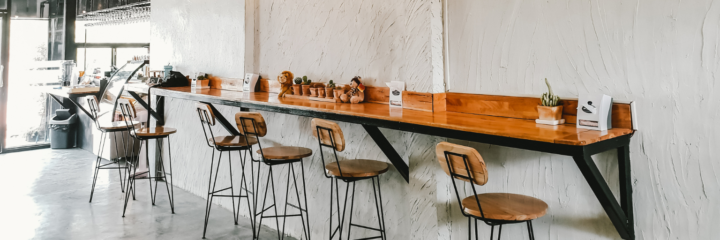
For owners planning cafe fitouts in Sydney that locals will share online, the goal is to design a space that looks great in content and works efficiently behind the scenes. The best results come from thoughtful hospitality design that considers operations, compliance, customer flow, and brand identity.
Here is a practical guide to planning an aesthetic cafe that photographs well and is deemed Instagrammable by patrons.
Start with your brand story, then build the look
The cafes people remember usually feel consistent. A strong concept gives your fitout direction, so every design choice supports the same vibe.
Before selecting finishes, define:
- Your brand personality, such as coastal calm, modern minimal, or warm vintage
- Your customer profile and peak trading rhythms
- Your average visit type, from takeaway traffic to longer sit-down stays
- What customers should notice first when they walk in
When this is clear, your hospitality design decisions become faster and more consistent.
Make customer flow easy from entry to exit
An aesthetic space still needs to move well, especially during busy hours. The best cafe layout design keeps ordering and pickup intuitive, so queues do not block seating or entry.
Consider:
- A clear line of sight to ordering
- A queue path that stays off primary walkways
- A pickup zone that prevents crowding near the counter
- A layout that supports staff movement between coffee, kitchen, and service points
If you want to explore the fitout planning steps that support smooth delivery, Focus Shopfit outlines how a site moves through approvals, project management, and installation.
Design photo moments that feel natural
Instagrammable does not mean staged. It means the space has intentional zones where content happens easily.
Popular photo-friendly features include:
- A statement wall with texture, tile, or signage
- A banquette seat with good lighting and clean sightlines
- A hero counter design that frames products and coffee craft
- A unique ceiling feature, pendant lighting, or overhead greenery
The most important factor is lighting. Natural light is ideal, but the right interior lighting can still deliver flattering photos and a warm atmosphere.
Colour also plays a major role in how your cafe photographs. For practical guidance on using colour intentionally, Focus Shopfit’s article on the psychology of colour in retail is a useful reference for palette planning.
Choose finishes that are camera-friendly and durable
In cafes, surfaces work hard every day. Benchtops, floors, and wall finishes need to handle cleaning, spills, heat, and heavy traffic.
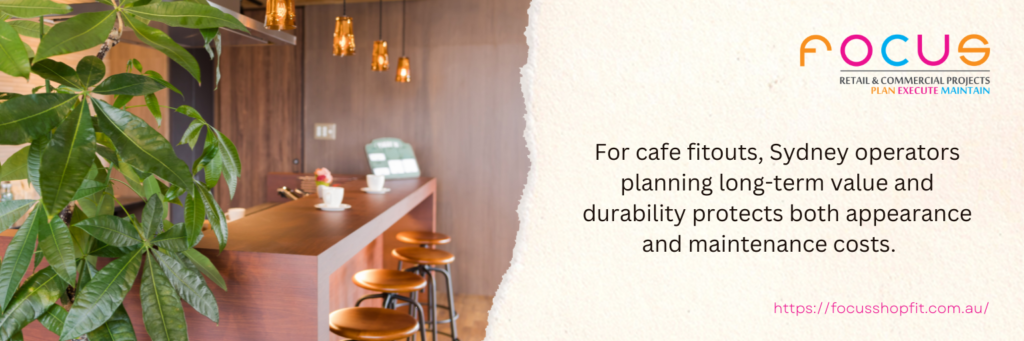
For cafe fitouts, Sydney operators planning long-term value and durability protects both appearance and maintenance costs.
Practical finish decisions include:
- Matte or satin finishes to reduce glare in photos
- Flooring that supports easy cleaning without looking worn quickly
- Joinery finishes that resist scuffs in high-contact zones
- Wall materials that can handle frequent wipe-downs
If you are comparing fitout budgets and finish tiers, check out this guide to help frame costs and trade-offs.
Plan seating for comfort and turnover
Seating is both a design feature and a revenue lever. A beautiful space that feels uncomfortable will not attract repeat customers.
Use your cafe layout design to match different visit types:
- Smaller tables for quick stops
- A comfortable banquette for longer stays
- Accessible seating for prams, mobility needs, and wider walkways
- An outdoor area if your site and approvals support it
If your Sydney location includes outdoor trading, City of Sydney provides clear guidance through its outdoor dining guidelines. This helps you plan furniture placement and pedestrian access requirements.
Design the back-of-house for speed and safety
Guests see the cafe’s front-of-house, but operations depend on the back-of-house. Efficient kitchen and prep planning reduces service time and staff friction.
Key considerations include:
- Clear separation between clean and dirty workflows
- Easy access to handwashing and cleaning facilities
- Storage placement that supports service speed
- Safe movement paths for hot items and deliveries
For food premises, NSW Food Authority provides useful information for operators via its page on cafes, restaurants, and retail outlets.
Food safety requirements are also supported by the Food Standards Code, including Standard 3.2.3 Food premises and equipment.
These references help you align design decisions with practical compliance requirements early, which supports smoother approvals and delivery.
Build with realistic timelines so your opening stays on track
Fitout timing affects everything from staffing and supplier planning to your marketing launch. The earlier you align your programme with trades, lead times, and approvals, the smoother your final weeks become.
This is especially important for cafe fitouts Sydney businesses, where service equipment, ventilation, and hydraulic requirements often add complexity. If you are estimating timelines, this article is a helpful benchmark.
Finishing touches that lift shareability
Once the main fitout is complete, styling and details add polish. This is where the space becomes recognisable and brand-led.
Consider:
- Branded signage that feels integrated, not added later
- Menu presentation that complements the interior
- Lighting colour temperature that flatters food and skin tones
- A consistent material story across furniture and decor
A strong finish helps customers photograph the space from multiple angles, which supports organic social sharing.
The most successful cafe fitouts Sydney owners invest in are designed for real service conditions and real customers, not only for photos. When layout supports speed, finishes handle daily wear, and lighting flatters both food and people, the space becomes easier to run and easier to market. That is the practical value of thoughtful hospitality design paired with smart cafe layout design.
If you want a fitout plan that balances brand, compliance, and operational flow, Focus Shopfit can help you shape the concept and deliver it with confidence. Start the conversation by reaching out via the contact page.