
How to maintain your store’s fitout: Tips to protect your investment
A fresh fitout can transform your store, enhancing its functionality, aesthetic appeal, and customer experience. Whether you’ve just revamped a retail shop, café, or office, your investment deserves proper care to maintain its look and longevity. Without regular upkeep, even the most well-designed fitout can lose its charm over time, costing you repairs, replacements, or dissatisfied customers.
At Focus Shopfit, we recognise the importance of a durable and visually appealing store interior. That’s why we’ve compiled this comprehensive guide to help you maintain your new fitout and keep it looking pristine for years to come.
Your store fitout is a business asset. Here are factors on why maintenance matters:
- Preserve aesthetic appeal. A spotless and well-maintained store enhances customer perceptions of your brand.
- Enhance durability. Shopfitters in Darwin provide proper care that prevents wear and tear, ensuring your fitout lasts longer.
- Cost-effective. Routine maintenance avoids expensive repairs or full-scale refurbishments.
- Compliance. Australian health and safety regulations require businesses to maintain clean and safe premises.
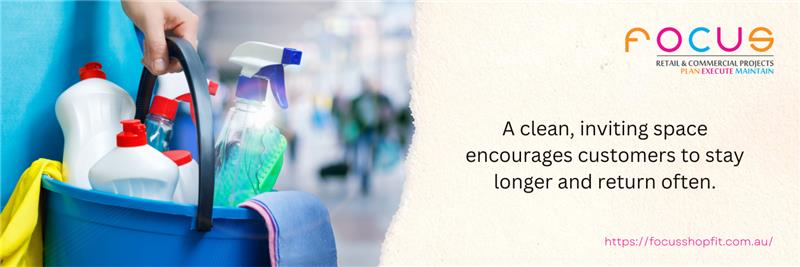
- Boost customer experience: A clean, inviting space encourages customers to stay longer and return often.
Key factors of fitout maintenance
Taking care of your new fitout is an essential part of establishing your brand’s identity and expanding your business. Here are some tips on how you can regularly maintain your retail store.
General maintenance tips
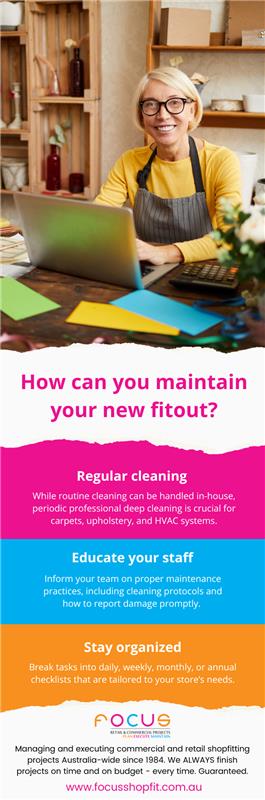
- Develop a routine maintenance plan tailored to your store’s specific needs. Break tasks into daily, weekly, monthly, and annual checklists to stay organised.
- While routine cleaning can be handled in-house, periodic professional deep cleaning is crucial for carpets, upholstery, and HVAC systems.
- High-quality materials are easier to maintain and last longer. If you worked with Focus Shopfit for your fitout, rest assured that you’ve started with durable and premium materials.
- Educate your team on proper maintenance practices, including cleaning protocols and how to report damage promptly.
- Consider partnering with a commercial shopfitting company or a professional maintenance provider who can inspect and repair your fitout as needed.
Check out these area-specific tips to effectively maintain the rest of your shop.
Floors and carpets
- Daily cleaning. Sweep or vacuum your store to remove dirt and debris. For tiled or vinyl flooring, use a damp mop with a pH-neutral cleaner to prevent scratches.
- Spot cleaning. Address spills immediately to prevent stains, especially on carpets or natural stone.
- Periodic deep cleaning. Engage professional services to deep-clean carpets or polish hard floors every six months to a year.
- Protect high-traffic areas. Use rugs or mats in entryways and other high-traffic zones to reduce wear and tear.
Walls and paintwork
- Clean regularly. Wipe down painted walls with a damp cloth or a gentle cleaner to remove dust and smudges.
- Protect corners and edges. Install corner guards to reduce damage in high-traffic areas.
- Repaint as needed. If walls start to look dull or chipped, schedule a touch-up or repainting session every couple of years.
Fixtures and fittings
- Inspect regularly. Check for loose screws, broken hinges, or wobbly fixtures. Tighten or repair as needed.
- Dust and polish. Keep shelving, countertops, and displays free from dust. Use appropriate cleaning products for materials like wood, glass, or metal.
- Prevent overloading. Avoid overloading shelves or displays, as this can cause structural damage over time.
Lighting
- Clean light fixtures. Dust and wipe downlights, lamps, and covers to ensure maximum brightness.
- Replace bulbs promptly. Swap out burnt-out bulbs immediately to maintain consistent illumination.
- Upgrade to LEDs. If you haven’t already, consider using energy-efficient LED bulbs to save on electricity and reduce heat.
HVAC and ventilation systems
- Filter maintenance. Replace air filters regularly to ensure optimal airflow and reduce allergens.
- Inspect for issues. Schedule annual professional inspections to identify and fix leaks, blockages, or inefficiencies.
- Clean vents. Dust or vacuum vents to prevent buildup and maintain clean air circulation.
Glass and mirrors
- Daily cleaning. Use a streak-free glass cleaner for windows, mirrors, and glass display cases.
- Inspect for damage. Look for chips or cracks and repair them promptly to avoid larger issues.
- Tinted windows. If you have tinted glass, follow the manufacturer’s guidelines for cleaning to avoid damaging the film.
Signage and branding elements
- Regular cleaning. Dust and clean signs, both indoors and outdoors, to ensure they’re legible and visually appealing.
- Check for wear. Inspect for fading, peeling, or damage from weather exposure. Replace or refurbish signage when necessary.
- Lighting maintenance. If your signs are illuminated, ensure the lights are functioning and replace any burnt-out bulbs.
Common fitout maintenance challenges in Australia
There are many ways to keep your store from wear and tear, but there will be times when you might experience unavoidable situations. Here are common fitout challenges you might be facing and what you can do when they happen.
Climate concerns
Australia’s varied climate can take a toll on materials. For example, high humidity in coastal areas may lead to mold or rust. Combat this with proper ventilation and moisture-resistant materials.
Pests
Certain areas are prone to pests like termites or rodents. Regular pest control measures are essential.
UV damage
Intense sunlight can fade furniture, signage, or flooring. Install UV-protective films on windows to minimise this risk.
This guide can help protect your fitout investment, keep your store looking its best, and continue to impress your customers for years to come. Focus Shopfit specialises in commercial shopfitting and maintaining high-quality fitouts for businesses across Australia. Whether you need advice on upkeep or a full-scale redesign, our team is here to help.

Sustainable shopfitting: A guide to eco-friendly retail design
Nowadays, sustainability is a standard that shapes the way businesses operate, and the retail industry is no exception. As the demand for environmentally responsible brands grows, retailers are turning attention to the ethicality of their products and even their physical spaces. Shopfitting plays a central role in this transformation, with sustainability now at the core of design, materials, and construction practices. At Focus Shopfit, sustainable shopfitting is gaining momentum, blending environmental responsibility with modern design to create spaces that are as eco-friendly as they are inviting.

The shift towards eco-friendly retail spaces
More retailers are recognising that their stores are reflections of brand values. A store that embraces sustainable shopfitting in Australia reduces its carbon footprint and sends a powerful message to customers. Shoppers are far more likely to connect with brands that show care for the planet, and physical retail spaces offer the perfect opportunity to make that commitment visible.
Sustainability in shopfitting can take many forms. In Australia, the trend is also influenced by government and industry initiatives encouraging businesses to adopt greener practices, making eco-conscious design a competitive advantage as well as an ethical choice.
Sustainable materials in shopfitting
One of the most direct ways sustainability is reflected in shopfitting is through the materials chosen. Traditional shopfitting often relied heavily on plastics, laminates, and non-renewable resources. Today, eco-friendly alternatives are front and centre.
- Recycled and reclaimed timber. Repurposed wood not only reduces waste but also adds warmth and character to interiors. Its unique textures bring individuality to each space, ensuring that no two fitouts look the same.
- Bamboo and other renewables. Fast-growing, durable, and versatile, bamboo is becoming a favourite for shelving, flooring, and displays.
- Low-VOC paints and finishes. Volatile organic compounds (VOCs) release harmful chemicals into the air. By using low-VOC paints and finishes, shopfitters create healthier environments for both staff and customers.
- Recyclable metals and composites. Aluminum and steel, when recycled, can provide durable frameworks for shop designs with minimal environmental impact.
Energy-saving and smart design
Another vital aspect of sustainable shopfitting is energy efficiency. Lighting, heating, cooling, and digital displays consume a significant portion of a store’s energy. By designing spaces with sustainability in mind, shopfitters can minimise energy use while still creating a welcoming environment.
LED lighting, for instance, has become the standard due to its longevity and low energy consumption. Beyond swapping bulbs, modern designs often incorporate smart lighting systems that adjust brightness according to natural light levels or customer flow. Climate control systems can be optimised with zoned heating and cooling, ensuring comfort without excessive energy use.
Store layouts also play a role. Open-plan designs improve air circulation and reduce the need for artificial lighting, while the strategic placement of windows utilises natural light. Every design decision contributes to an overall reduction in energy consumption.
Modular and flexible fitouts
Sustainability in shopfitting is also about longevity and adaptability. Modular fitout systems — which can be easily rearranged, reconfigured, or expanded — ensure that stores remain functional and attractive for years without requiring a complete overhaul.
This flexibility reduces waste by extending the lifespan of fixtures and fittings. Focus Shopfit attends to retailers’ needs, where trends and seasonal changes can move quickly. Modular shopfitting ensures businesses can stay current without compromising on sustainability.
The customer connection
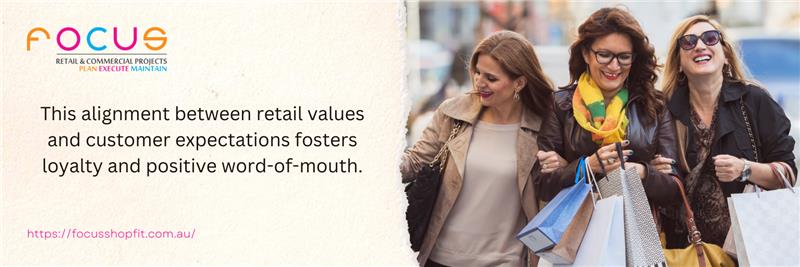
The most powerful effect of sustainable shopfitting is the impression it leaves on customers. When customers walk into a space that feels natural, healthy, and thoughtfully designed, it enhances their overall experience. This alignment between retail values and customer expectations fosters loyalty and positive word-of-mouth.
Shopfitting companies like Focus Shopfit prioritise sustainability and are finding themselves well-positioned to serve brands that want to demonstrate their environmental responsibility. Eco-conscious design has become a way to differentiate in a competitive retail landscape. Sustainable shopfitting in Australia is a commitment to the future of retail, where style, function, and environmental responsibility work hand in hand.

As sustainability continues to shape consumer behaviour and government policy, the demand for eco-friendly shopfitting will only grow. Australian shopfitters who embrace this movement are not only contributing to a greener future but also creating retail spaces that inspire, engage, and endure.
Autumn shopfitting trends in 2025: Creating spaces that inspire and convert
As autumn unfolds, shopfitting is taking on a whole new dimension. Retailers are no longer just updating their spaces for aesthetics; they’re reimagining their environments to meet evolving customer expectations, embrace technology, and create memorable experiences. This season, Focus Shopfit combines trends with warmth, sustainability, and immersive design, blending functionality with style to help retailers stay ahead.
- Warm, earth-inspired palettes
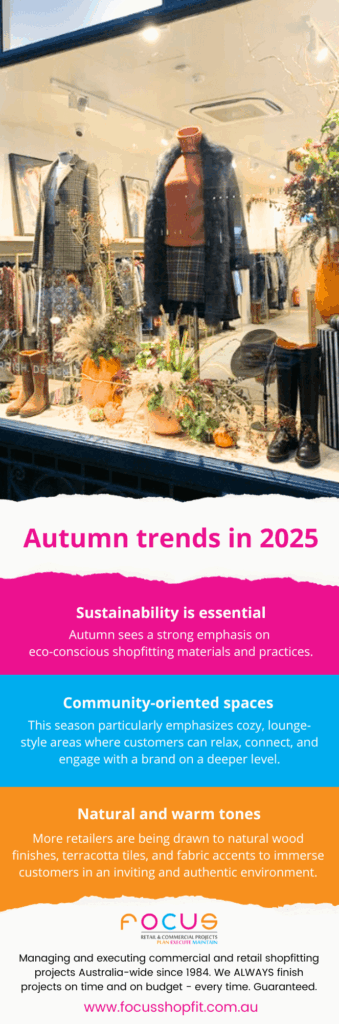
Autumn has always been associated with rich and cosy tones. This timeless inspiration translates into shopfitting choices. Retail interiors are leaning toward earthy palettes. Burnt oranges, deep greens, warm browns, and muted neutrals are colors that evoke a sense of comfort and connection. More retailers are being drawn to natural wood finishes, terracotta tiles, and fabric accents to immerse customers in an inviting and authentic environment.
Lighting also plays a major role in setting the ambiance. Amber-tinted LEDs and dynamic lighting systems adjust the atmosphere throughout the day and create a welcoming environment that’s also energy efficient.
- Flexible layouts for hybrid shopping
Hybrid layouts with in-store experiences supporting digital convenience have been popular this year. Focus Shopfit reflects this by incorporating flexible, modular layouts. Moveable shelving, adjustable product displays, and foldable partitions allow retailers to quickly reconfigure spaces for events, seasonal promotions, or experiential showcases.
Retailers are also integrating digital elements and technology like QR codes, augmented reality (AR) mirrors, and touchscreen displays to create seamless links between in-store browsing and online shopping. Customers can explore physical products while also accessing digital reviews, customisation options, or delivery services right from the shop floor.
- Sustainability at the core
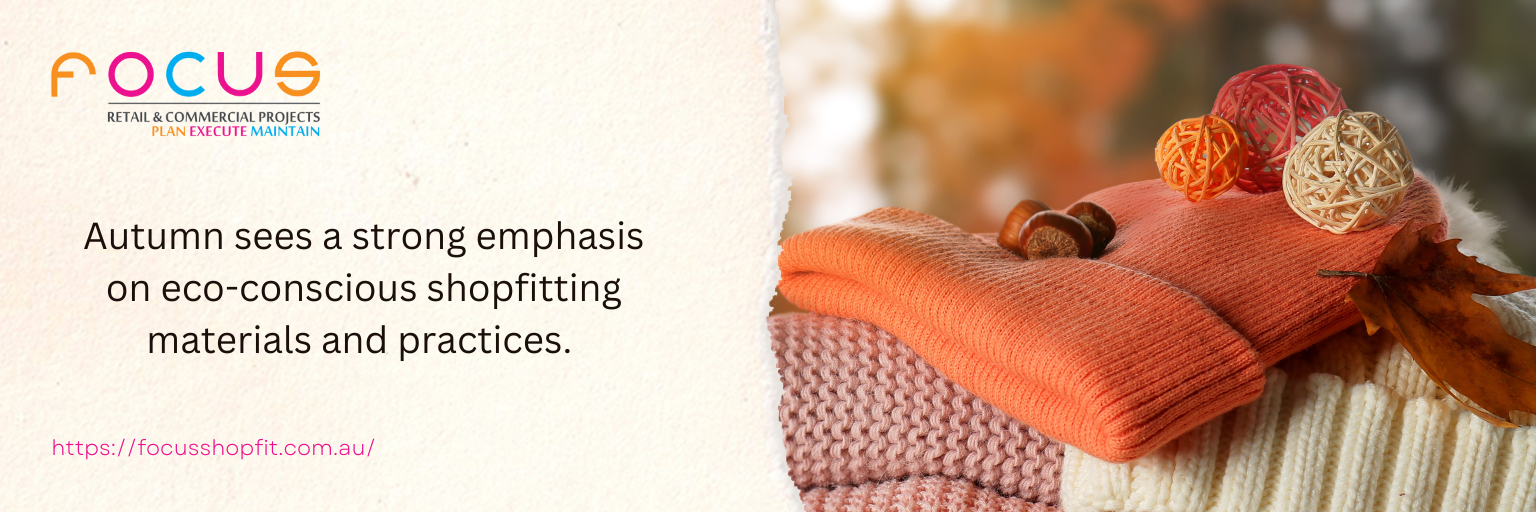
Autumn sees a strong emphasis on eco-conscious shopfitting materials and practices. Reclaimed wood, recycled metals, biodegradable fixtures, and low-VOC finishes are widely adopted. Retailers are also showcasing transparency by displaying sustainable products and materials on store displays and presenting certifications for sustainable materials to send a clear message that environmental responsibility matters.
In Australian commercial shopfitting, smart climate systems, solar integration, and motion-sensitive lighting reduce costs and improve environmental impact, while also aligning with consumer expectations.
- Multi-sensory experiences
Autumn’s shopfitting trends highlight more than just the visual. Retailers are designing immersive, multi-sensory experiences to engage customers. Warm and pleasing scents like cedarwood or cinnamon diffuse through stores to reflect the season, while carefully curated background music sets the atmosphere.
Textures such as boucle seating, stone surfaces, and raw wood finishes encourage customers to slow down and connect with the space. These elements help create an environment where customers linger longer and develop stronger emotional ties to the brand.
- Community-focused spaces
Another standout trend this season is the rise of community-oriented retail spaces. Shops are becoming gathering places rather than just being transactional. Coffee corners, workshop areas, and pop-up installations give customers reasons to return, even when they’re not shopping.
Focus Shopfit offers services like commercial shopfitting that increasingly blends retail with lifestyle by offering spaces that bring people together. Autumn particularly emphasises cosy, lounge-style areas where customers can relax, connect, and engage with a brand on a deeper level. This creates customer loyalty and a sense of belonging.
- Seasonal storytelling through design
Shopfitting is heavily influenced by storytelling. Retailers are using their layouts, decor, and visual merchandising to tell brand-specific narratives aligned with seasonal themes. Think harvest-inspired window displays, modular shelving that frames seasonal products like art pieces, or interactive installations that change as autumn progresses.
Shopfitting trends this autumn highlight the importance of creating spaces that are flexible, sustainable, and emotionally resonant. From earthy color palettes to tech-driven hybrid layouts and community-focused areas, retailers are blending the physical and digital worlds while staying rooted in comfort and authenticity.
For those seeking to shopfit in Perth, this season proves that the right design can transform retail spaces into destinations that inspire, engage, and convert.