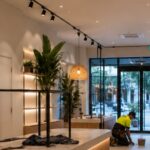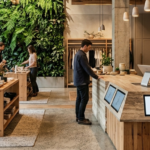
Lighting can quietly shape how customers feel, where they look, and how long they stay. In a well-planned store, lighting supports navigation, creates energy in feature areas, and makes products look true to life. When planning a new fitouts in Australia or refresh, choosing the right retail lighting solutions is one of the fastest ways to improve the in-store experience without changing your product range or floor plan.
This guide breaks down the essentials of commercial lighting for retail, including lighting layers, technical choices, and practical checks that help you get a store-ready result.
Start with the customer journey
Before selecting fixtures, define what you want customers to do in each zone. A front window display needs attraction, a feature wall needs emphasis, and a checkout needs clarity and comfort.
A simple zoning exercise helps you match retail lighting solutions to real behaviours, such as browsing, comparing colours, trying on items, or selecting add-ons near the counter.
When you are refining layout at the same time, this guide to planning shop design and layout helps connect circulation paths with the displays you want customers to notice first.
Use layered lighting, not a single bright wash
The best retail environments rely on layers. Instead of one uniform brightness, you create contrast and direction through multiple types of lighting.
A balanced approach to commercial lighting usually includes the following.
- Ambient lighting for overall illumination across the store
- Accent lighting to highlight hero products, mannequins, and feature walls
- Task lighting for service points such as POS, fitting rooms, and work benches
- Decorative lighting for visual identity, mood, and brand character
When layers are planned together, you can reduce glare, improve product focus, and make your store feel more premium even with a simple fitout.
If you are confirming scope and responsibilities, the breakdown in what is included in a shopfit is useful for understanding where lighting decisions sit within the wider fitout plan.
Get the technical basics right
Retail lighting decisions become easier once you lock in a few key technical settings that affect how products and people look in the space.
Colour rendering index (CRI) is a measure of how accurately a light source shows colour compared to natural light. For most retail applications, choosing high CRI lighting helps reduce dull or distorted product colours.
Correlated colour temperature (CCT) refers to the warmth or coolness of a light source. Warm lighting can feel welcoming, while cooler settings can feel crisp and modern. The right choice depends on your brand and product type.
Uniform glare rating (UGR) is used to assess visual discomfort from glare. Lower glare supports comfort, especially around mirrors, counters, and high-traffic zones.
For businesses that want guidance aligned with Australian interior lighting expectations, the AS/NZS 1680 series is a useful reference point. Standards Australia provides details on AS/NZS 1680.0 for safe movement, while AS/NZS 1680.1 covers general interior lighting principles.
Choose LED lighting for performance and efficiency
Light emitting diode (LED) is now the standard choice for modern retail because it supports energy efficiency, better control, and long operating life.
Well-designed LED retail lighting makes it easier to create strong contrast between feature displays and general floor space, especially when paired with dimmers and directional fittings.
It also helps with maintenance planning because fewer lamp changes reduce disruption on the shop floor. Focus Shopfit supports long-term care through maintenance contracts, which can be especially valuable for high-traffic sites or multi-location brands.
Design lighting by zone
A practical lighting plan treats each area as its own environment. You are aiming for consistency in customer comfort, while still guiding attention to products and brand moments.
Entrance and windows often need higher impact lighting to attract attention from outside. Feature zones benefit from stronger accent lighting so key items read clearly from a distance.
Fitting rooms should have flattering light and minimal glare so customers feel confident. Checkouts need even task lighting so staff can work comfortably, and customers can see details clearly.
During peak trade periods, strong contrast around feature tables and hero walls can lift visibility and reduce visual clutter. The ideas in this Christmas shopfitting checklist show how lighting can support promotions without needing a full re-fit.
Avoid common lighting mistakes that reduce sales impact
Lighting issues often show up in ways that are hard to diagnose, such as products looking different inside the store than they do in daylight, or customers avoiding certain areas because of glare or harsh brightness.
Common pitfalls include over-lighting every zone equally, placing spotlights too close to reflective surfaces, and selecting mismatched colour temperatures across adjacent areas.
When you are reviewing drawings, it is worth checking for the issues outlined in Focus Shopfit’s fitout mistakes to avoid guide, especially around glare, reflections, and missed feature lighting opportunities.
Plan lighting control and switching early
Controls are part of the experience. Switching zones separately allows you to adjust lighting through the day, reduce energy use, and support different moods for different trading periods.
For example, a calmer morning setting may suit service retailers, while a brighter evening setting can suit high foot traffic periods. This is where thoughtful commercial lighting design becomes a practical tool for operations.
If your business is also planning major mechanical changes, such as new air conditioning or ceiling works, align lighting design early so fittings and services do not clash during installation.
Balance brand identity with compliance and comfort
Lighting choices should reinforce brand identity, but they also need to support safe movement, visibility, and day-to-day comfort for staff. The right plan improves customer experience and reduces fatigue for teams working long shifts.
For projects that need coordinated delivery, the fitout team at Focus Shopfit works through a structured build and installation approach, so lighting design aligns cleanly with ceiling works, services, and final certification.
Great retail lighting is not a single product choice. It is the result of small decisions that work together across layout, product presentation, and operations. When you align your lighting layers, controls, and technical settings, your retail lighting solutions for fitouts in Australia become a measurable part of store performance, not just decoration.
If you are planning a new fitout or want to upgrade your LED retail lighting strategy, Focus Shopfit can help you design a lighting plan that supports merchandising and buildability. Reach out via the contact page to discuss your space, brand goals, and timeline.