In the competitive world of retail, every detail matters. From the products you stock to the way you engage with customers, each element plays a crucial role in the success of your business.
One often overlooked aspect is the retail store layout. An effective store layout isn’t just about aesthetics. It’s a strategic tool that can significantly impact customer experience and, ultimately, your bottom line. Focus Shopfit specialises in creating store layouts that are both aesthetically pleasing and strategically effective.
In this article, we’ll delve into why store layout is so important and how it can be optimised to boost sales and enhance customer satisfaction.
Understanding the basics of store layout
Before we explore the importance, it’s essential to grasp what a store layout entails. A store layout is the strategic arrangement of fixtures, merchandise, and equipment within a retail space. It guides customers through the store, influences purchasing behavior, and enhances the overall shopping experience.
Types of store layouts
There are several common types of store layouts, each serving different purposes:
- Grid layout: Often used in supermarkets and pharmacies, this layout features long aisles with merchandise on shelves on both sides.
- Loop (Racetrack) layout: Encourages customers to loop through the store in a predefined path, exposing them to various products.
- Free-flow layout: Offers a more relaxed shopping experience with fewer constraints, commonly used in boutiques and high-end stores.
- Spine layout: Combines elements of the grid and free-flow layouts, featuring a central aisle with branches.
The impact of store layout on customer behavior
An effective retail store layout can significantly influence how customers interact with your store. Here are factors on why guiding your customers with store layouts can improve your sales.
Guiding customer flow
A well-planned layout directs customers through the store in a way that maximises exposure to products. By strategically placing high-margin items in high-traffic areas, retailers can increase the likelihood of purchases.
Enhancing the shopping experience
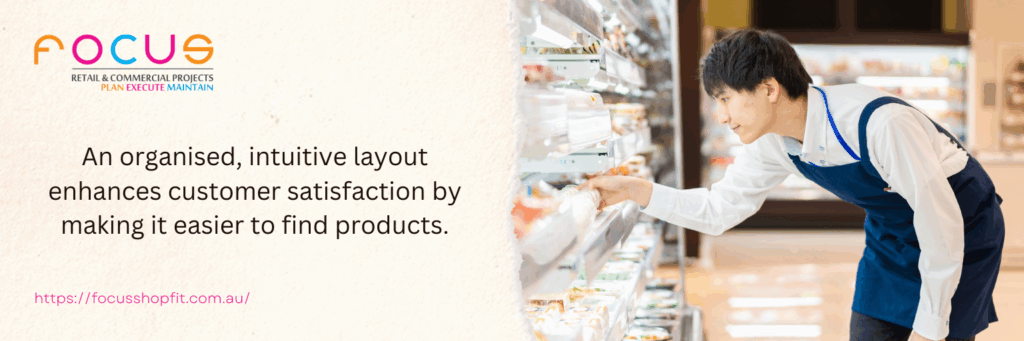
A cluttered or confusing layout can frustrate customers, leading them to leave without making a purchase. An organised, intuitive layout enhances customer satisfaction by making it easier to find products.
Encouraging impulse purchases
Strategically placed merchandise can encourage customers to make additional, often unplanned, purchases. For example, placing small, inexpensive items near the checkout can capitalise on impulse buying behavior.
Maximising space efficiency
In retail, space is money. Efficient use of space ensures that every square meter contributes to your revenue.
Product placement
By analysing sales data, retailers can identify which products are best sellers and allocate prime space to them. Less popular items can be placed in secondary locations.
Balancing aesthetics and functionality
While a store needs to look good, functionality should not be sacrificed. A layout that balances both can enhance the shopping experience without compromising sales potential.
Adapting to customer needs
Understanding your target market is crucial in designing a layout that meets their needs.
Accessibility
In Australia, retailers must comply with the Disability Discrimination Act, ensuring their stores are accessible to all customers. This includes considerations like aisle width and shelf height.
Cultural considerations
Australia’s diverse population means that retailers may need to consider cultural preferences in their store layouts. For example, providing clear signage in multiple languages can enhance the shopping experience for non-English speakers.
Leveraging technology in store layout
Modern technology offers new ways to optimise store layouts.
Heat mapping
Using sensors to track customer movements can provide insights into shopping patterns, highlighting high-traffic areas and potential dead zones.
Virtual reality planning
Virtual reality tools allow retailers to visualise and test different layouts before implementing them, saving time and resources.
The crucial role of shopfitters in store layout optimisation
Shopfitters play an important role in making your store functional and aesthetically pleasing to customers. They can also provide the right layout optimization according to your store’s needs. Here are some factors.
Customised solutions
Every retail space is and should be unique; a shopfitting team like Focus Shopfit works closely with clients to design layouts that reflect their brand identity and meet their specific needs.
Expertise in retail
Fitout experts in Australia are well-versed in local regulations, cultural considerations, and consumer behaviors with extensive experience in the Australian market.
End-to-end service
From initial design concepts to installation, we provide comprehensive services to ensure a seamless transformation of your retail space.
The importance of a store layout cannot be overstated. It’s a powerful tool that influences customer behavior, maximises space efficiency, and enhances the overall shopping experience. By investing time and resources into optimising your store layout, you set the stage for increased sales and sustained business growth.
Focus Shopfit is here to help Australian retailers navigate this critical aspect of their business. Contact us today to discover how we can transform your retail space into a strategic asset. Reach out to us and let’s create a unique shopping experience that will keep customers coming back.