
Shopfitting ideas to master the post-holiday returns experience
For Australian retailers, the holiday rush may be over, but the customer experience is far from finished. January brings the inevitable surge of post-holiday returns and exchanges. While often seen as a necessary evil, this period offers a vital, final chance to capture a customer's loyalty and secure future sales. The secret lies in your retail fitout—specifically, how you design the returns and customer service area.

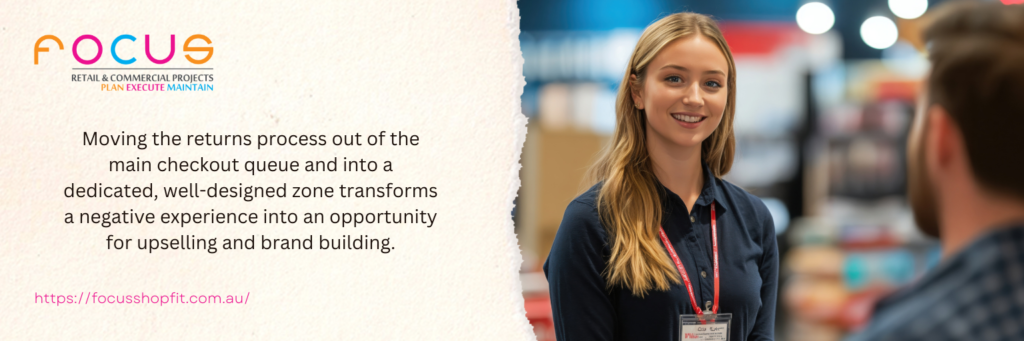
Moving the returns process out of the main checkout queue and into a dedicated, well-designed zone transforms a negative experience into an opportunity for upselling and brand building. It’s time to move shopfitting focus from just sales displays to creating an exceptional customer service station.
Check out these ideas to make the period as seamless for your customers as it is for your staff.
- The dedicated resolution zone
The first and most critical shopfitting step is physical separation. Integrating returns into the main cash wrap queue creates frustration for both customers and staff, slowing down everyone.
- Separate service counter: Install a dedicated customer service counter, distinct from the primary point-of-sale (POS) systems. This counter should be clearly signed—perhaps labelled "Customer Care & Exchanges"—and positioned in a low-traffic area, perhaps near the store entrance or a quiet corner. This simple change drastically reduces queue anxiety and allows staff to handle complex return issues without holding up paying customers.
- Privacy and comfort: Design the space with a more inviting, less transactional feel. Use comfortable joinery, perhaps a warmer timber finish than the main checkouts, and include seating or a small table for customers to review paperwork. The atmosphere should feel private and resolution-focused.
Equip this dedicated area with discreet digital screens that play engaging but non-intrusive brand content, or showcase new arrivals, subtly nudging the customer back into a shopping mindset.
- Strategic display for re-engagement
The moment a refund is processed is your golden opportunity to encourage a new purchase. The design of your customer service station should be a deliberate mechanism for re-engaging the shopper.
- Impulse display: The returns counter itself should feature high-margin, small, or irresistible impulse purchase items. Think low-cost accessories, unique local treats, or gift cards. These items are quick decisions that require minimal browsing.
- Exchange zone: Directly adjacent to the returns area, incorporate a small, curated visual merchandising display. This should feature new-season items or popular complementary products to what the customer has just returned. If they are returning clothing, display scarves and jewellery. If it is an electronics item, show off the latest protective cases. The goal is to make the transition from returning to buying seamless.
Use dynamic lighting to highlight the displays, drawing the customer's eye immediately after their transaction is complete. The focus must be on new value, not just the returned item.
- Staff experience and operational flow
A successful returns process hinges on efficient staff. Your retail fitout needs to support their ability to provide exceptional service under pressure.
- Ergonomic design: Ensure the service counter has sufficient counter space for paperwork, product inspection, and computer work. Poorly designed back-of-house areas or cramped counter space lead to staff stress and slower processing times.
- Integrated technology: The service desk must be fully equipped with POS terminals, scanners, and, crucially, access to real-time stock and order history. This omnichannel capability allows staff to quickly process exchanges or order a replacement size from another store or warehouse, turning a return into an immediate, satisfactory resolution.
The post-holiday returns period is a reality of modern retail. By strategically redesigning this touchpoint with a dedicated, comfortable, and sales-oriented customer service station, Australian retailers can transform a moment of potential disappointment into a significant opportunity for building lasting loyalty and securing those vital, secondary sales.
Seeing what’s possible is the first step. At Focus Shopfit, we’ve helped businesses across Australia create stunning environments that drive sales and enhance customer experience. Explore our portfolio to see the quality and craftsmanship we bring to every project. Get in touch with us today.

January maintenance checks you must do to prevent major fitout disasters
January in Australia means one thing for retailers: the holiday rush is finally over, but the summer heat is just getting started. After weeks of relentless foot traffic, long trading hours, and staff fatigue, your retail fitout is likely showing signs of serious wear and tear.

Ignoring the post-holiday damage is a direct route to costly, disruptive failures later in the year. January becomes the most critical period for preventative maintenance to ensure your store remains a safe, attractive, and efficient place to do business. A small check now can prevent a major, sales-killing disaster during your next busy period.
Here’s a quick checklist to get you started!
- Structural and safety audits
The sheer volume of shoppers during December puts immense stress on every part of your store's infrastructure. This high-use period often exposes weaknesses that were previously hidden, particularly in the structure of your shopfitting.
- Shelving and joinery: Inspect all wall units, gondolas, and display fixtures. Look for loose screws, wobbly brackets, or signs of bowing under load. Any structural compromise is a major safety risk. For change rooms, check that all hooks and mirrors are secure.
- Flooring and pathways: High traffic causes wear. Check for lifting vinyl, cracked tiles, or trip hazards in carpeted areas. Promptly addressing these issues is crucial for customer safety and to avoid potential liability claims.
- Signage and visual merchandising: Remove all holiday signage. Crucially, check that any heavy, suspended elements used for festive displays are properly removed and that their fixing points in the ceiling or walls are repaired to avoid future instability.
What’s next? Create a simple 'red tag' system. Any staff member spotting a wobbly shelf or broken fixture places a red tag on it, instantly taking it out of service until a professional fitter can assess the damage.
- HVAC and electrical systems
Australia’s summer heat makes HVAC (heating, ventilation, and air conditioning) reliability non-negotiable. A broken air conditioner in February can shut down a store. January is the ideal time for an essential technical preventative maintenance check.
- Air conditioning service: Engage a licensed technician for a full service. Clean or replace filters, check refrigerant levels, and inspect coils. Overworked units consume far more energy, leading to massive power bills. Regular servicing ensures maximum efficiency and longevity.
- Electrical load assessment: The temporary lighting and point-of-sale additions over the holidays may have stressed your circuits. Check for flickering lights, warm power points, or tripped breakers. Ensure all permanent display lighting—especially expensive LED tracks—is checked for loose wiring or connection issues. This greatly reduces the risk of an electrical fire or system failure.
Remember to document all maintenance work, including filter changes and electrical inspections. This creates a valuable history that helps identify recurring issues and proves due diligence for insurance purposes.
- Display technology and shopfitting flexibility
Modern retail relies on technology integrated directly into the fitout, from digital screens to charging points. The post-holiday period is the time to check that these investments are still performing.
- Digital display integrity: Check that all screens, menu boards, and digital signage are fully operational, free of damage, and running the latest content. Ensure mounting brackets and concealment of cables are still neat and secure after the rush.
- Modular system functionality: If you use a modular or flexible shopfitting system (common in fashion and electronics), verify that all components still lock together correctly. The constant movement of display units during the holiday resets can cause wear on locking mechanisms, compromising their stability. Repairing these elements now is vital before the next major visual merchandising change.

For Australian retailers, January is the clean-up and recovery phase, but it’s fundamentally an investment in future stability. Prioritising a detailed preventative maintenance schedule for your retail fitout right now is the simplest, most cost-effective way to avoid operational slowdowns and major expenditure for the rest of the year. Don't wait for a wobbly shelf or a failed air conditioner to force your hand—be proactive.
A commercial fitout is a significant undertaking, but you don't have to navigate it alone. The experienced team at Focus Shopfit is here to provide clarity and guide you through every step. Get in touch with us today.
Integrating AI and digital screens into your 2026 retail fitout
The future of Australian brick-and-mortar shops is about merging with online shops rather than competing with them. For retailers planning their 2026 refresh, the new imperative is a tech-centric retail fitout that uses artificial intelligence (AI) and high-impact digital displays to create an engaging, frictionless experience. The days of static posters and clunky point of sale (POS) systems are over. The modern physical store must function as a smart extension of the brand's online presence, powered by clever shopfitting that integrates these technologies seamlessly.
This shift is key for Australian businesses to meet the rising 'techspectations' of local shoppers, who increasingly expect convenience and personalisation in every transaction.
Dynamic digital signage for hyper-relevance
Digital screens, once used just for repeating promotions, are now the dynamic canvas of the store. When powered by AI, they transform into hyper-relevant sales drivers.
- Context-aware content: Imagine a shopper pauses in front of a jacket display. An embedded camera system (using privacy-compliant computer vision) anonymously detects their age group and gender, and AI instantly swaps the adjacent screen content. If it detects a young adult, the display might show styling tips from TikTok creators; if it detects an older customer, it might show fabric care information or local store stock availability. This dynamic content delivery makes the information immediately relevant, improving customer experience.
- Inventory integration: Digital screens integrated into your retail fitout should link directly to your inventory management system. If a specific shoe size is sold out in-store, a display near the empty spot can showcase a message offering to ship the item from the warehouse or another local store, turning a potential lost sale into a saved order.
- Tech visibility: Embed small, high-definition digital screens directly into shelving bays, known as bay headers. These can display current pricing, star ratings from online reviews, or QR codes for extended product information, bridging the online review culture with the in-store moment of truth.
AI-driven interactive touchpoints
The smartest shopfitting in 2026 revolves around replacing staff-intensive tasks with intuitive, intelligent self-service points.
- The virtual concierge: Install large, interactive kiosks that function as a virtual sales assistant. Shoppers can use these to check stock across all locations, locate products on a store map, or even use augmented reality (AR) to see how a piece of furniture looks in their home via their phone, all guided by an AI recommendation engine.
- Smart fitting rooms: For fashion retailers, the fitting room is the new focus. RFID tags on garments trigger content on an internal screen, displaying complementary products, different colour options, or allowing the customer to request a different size without leaving the room. This greatly enhances the customer experience and drives upselling.
Data flow and operational efficiency
The real value of this integrated technology is the data it provides. Australian retailers can use these new retail fitout elements to create a powerful feedback loop.
- Heat mapping and flow: AI cameras can analyse customer flow—which aisles are popular, where people stop (dwell time), and where bottlenecks occur. This data is invaluable for continuously optimising the physical layout of the store, ensuring merchandise is placed where it is most likely to be seen.
- Predictive merchandising: By correlating digital screen engagement data with actual POS sales, AI can learn which visual displays and messaging are most effective. This allows the system to continuously self-optimise, ensuring the right content is on display at the right time of day.

In 2026, the physical store in Australia is poised to become the most engaging channel, provided it embraces the digital evolution. By integrating AI and high-quality digital screens into your shopfitting design, you create a seamless store—one that is smarter, more responsive, and more profitable.
Contact Focus Shopfit today for a consultation on a smart retail fitout design that harnesses AI and digital display technology for your brand.
The year of the circular economy: Designing retail fitouts with sustainable Australian materials
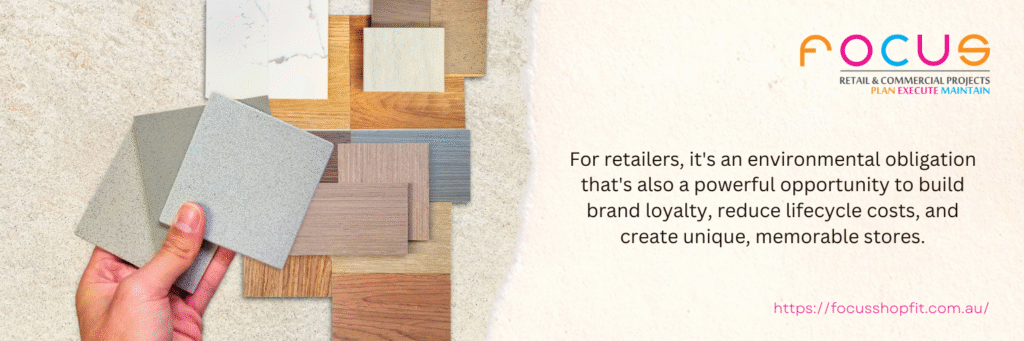
The Australian retail sector is reaching a tipping point. The traditional "take, make, dispose" model is rapidly becoming obsolete, replaced by the imperative of the circular economy. For retailers, it's an environmental obligation that's also a powerful opportunity to build brand loyalty, reduce lifecycle costs, and create unique, memorable stores.

In the face of Australia’s national goal to double its circularity rate by 2035, the decision of which materials to use in your next retail fitout is now central to business strategy. The key lies in deliberately sourcing locally, closing material loops, and designing for a long, adaptable life.
- Embracing Australian reclaimed and recycled materials
Moving to a circular economy means maximising the lifespan and utility of every resource. For shopfitters, this translates into a deliberate shift away from virgin materials towards those that already possess a rich local history.
- Reclaimed timber: Few materials offer the same warmth and authentic Australian character as reclaimed timber. Sourcing planks from decommissioned woolsheds, old wharves, or demolition sites provides incredibly durable wood—like Spotted Gum or Blackbutt—that reduces demand on new forestry. This material can be used for flooring, feature walls, or joinery, giving your space a unique story customers will appreciate.
- Recycled aggregates and plastics: Australian innovation is transforming waste streams into high-quality building products. Look for countertops made from recycled glass and concrete aggregate, or floor coverings made from upcycled ocean plastic or textile waste. These materials often have lower embodied carbon and a unique aesthetic appeal that immediately communicates your brand’s commitment to sustainability.
Tip: Work with Australian suppliers who provide clear provenance documentation. Telling the story of where your recycled timber came from builds an immediate connection with the local, conscious consumer.
- The power of Design for Disassembly (DfD)
The ultimate failure of the linear economy in retail is the massive waste generated during a store strip-out. A truly circular retail fitout must be designed to be deconstructed, not demolished. This strategy is known as Design for Disassembly (DfD).
- Modular fixtures: Replace permanent, custom-built walls and shelves with modular retail shelving systems. These fixtures use mechanical fixings (screws and brackets) rather than permanent adhesives or stud walls, allowing them to be quickly dismantled, reconfigured, or moved to a new site without destruction. This dramatically increases the longevity of your assets and drastically reduces construction and demolition waste.
- Material separation: Ensure that different materials are easily separable. For example, fixtures should not be laminated with complex, hard-to-recycle films, and different components (wood, metal, glass) should be fixed with screws, not glue. This prepares every component for its next life, whether that’s being recycled back into raw material or reused in another store.
- Sustainable sourcing for healthy interiors
The circular economy seeks to address where materials end up while ensuring they are healthy for the people who use the space. Australian consumers are becoming increasingly aware of volatile organic compounds (VOCs) and indoor air quality.
- Low-VOC paints and finishes: Specify paints, adhesives, and sealants with low or zero VOC content. This simple step vastly improves the air quality for your staff and customers, aligning with the "healthier environment" goals of the circular economy. Australian-made brands often offer excellent low-VOC ranges designed for local compliance.
- Local supply chains: Prioritise working with local Australian manufacturers for all joinery and furniture. Sourcing materials from within your state or country significantly reduces the embodied carbon associated with transport and supports the domestic economy, making your supply chain more resilient and transparent.
The future of Australian commerce demands retail spaces that are inherently sustainable. By integrating locally sourced reclaimed materials, adopting Design for Disassembly principles, and prioritising indoor air quality, your brand can move beyond simple sustainability talk and fully embrace the circular economy. This approach not only protects our environment but provides a clear competitive edge in a market that values authenticity and ethical practice.
At Focus Shopfit, we partner with ambitious businesses to create spaces that aren't just built for today but designed for a sustainable tomorrow. Contact Focus Shopfit to learn more.
Reconfiguring your Australian retail fitout after Christmas
The Australian summer retail calendar demands extreme agility. You’ve just finished the Christmas rush, but the job isn't done. The period immediately following Boxing Day—and leading into the New Year and back-to-school (BTS) period—is crucial. Converting your store from festive fantasy to functional clearance hub, and then into a fresh, forward-looking space, often needs to happen within a 48-hour window.

This rapid transition requires more than just tidying up. It demands a tactical approach to your flexible retail fitout. Here is a practical, step-by-step guide to striking holiday decor, clearing floor space, and transitioning into high-profit New Year and BTS themes.
Phase 1: Strike and clear
This phase focuses on ruthless efficiency—removing the seasonal elements that no longer drive sales and preparing the floor for high-volume clearance. Before you start, take a single "after" photo of your successful Christmas layout. This saves time next year and provides a visual reference for your shopfitter during future planning.
- Strike the decorations: Assign small teams to specific zones (windows, cash wrap, central displays). All soft decorations (tinsel, garlands, themed signage) must be stripped and packed away. The goal is to remove the Christmas feel entirely. Store these items in clearly labelled, dust-proof containers for next year.
- Deconstruct focal points: Immediately dismantle any dedicated Christmas structures, like gift wrapping stations or decorative trees. This instantly frees up critical floor space needed for new, high-volume displays. Use mobile modular retail shelving to temporarily store items while large floor areas are cleared.
- Audit lighting and signage: Change all lighting colours from warm white/gold to bright, clean white light (5000K-6000K). Remove or cover any fixed Christmas-themed graphics. Update digital signage and any external window vinyl to simple, high-impact "SALE" messaging. This is key for the immediate transition to a clearance mindset.
Phase 2: Floorplan pivot
With the floor clear, the focus shifts to maximising flow for clearance and setting the groundwork for the next major theme. Use bold, temporary floor decals (arrows or footprint trails) leading into the store and directing traffic straight to the Clearance Zone during the immediate post-Christmas days.
- Define the clearance zone: Use your flexible retail fitout to create a single, massive clearance zone, ideally near the entrance or in a high-traffic path. Reposition all mobile gondolas and modular retail shelving into straight lines or angled racetrack formations. This layout encourages fast customer flow, maximises inventory visibility, and prevents browsing bottlenecks.
- Stock consolidation: Bring all remaining seasonal inventory (gifts, apparel, homewares) into the clearance zone. Consolidate stock from multiple aisles onto fewer, densely packed fixtures. Lowering shelf heights slightly can accommodate more product layers, increasing the density of the sale area.
- Isolate the new theme area: Identify a distinct, separate zone for the upcoming New Year or back-to-school (BTS) theme. Even if the product isn't fully set, this area should be visually distinct. Use a partition, a different flooring texture, or a dramatic change in retail track lighting to signify that this area is forward-looking and separate from the clearance frenzy.
Phase 3: Forward focus
The final hours are dedicated to refining the customer experience and setting the tone for the January/February trade.
- Merchandise the BTS/New Year zone: Introduce the initial core products for the new theme (e.g., diaries, stationery, fitness gear, travel accessories). Use clean, minimalist retail track lighting and light timber or metal fixtures to project a sense of clean organisation, utility, and fresh starts.
- Refine the checkout: Clear the impulse purchase zones near the register of any lingering Christmas novelty items. Replace them with high-margin, small items relevant to the New Year (e.g., healthy snacks, phone chargers, and budget stationery).
- Final store walkthrough: Complete a full walkthrough focused on safety and compliance. Ensure all fire exits are clear (now that seasonal displays are gone) and that temporary electrical wiring used for the holiday lights has been safely removed or disconnected.
By employing these timed steps and relying on the versatility of your flexible retail fitout, you can successfully execute a major thematic pivot in a short time to ensure your Australian store captures maximum value from the clearance rush and is perfectly positioned for the New Year trade.
Don't let post-holiday fatigue slow your business down. A strategic, flexible retail fitout plan is your ultimate tool for seamless transitions and sustained profitability. Get in touch with us today!
3 Australian shopfitting trends you need to adopt in 2026
The Australian retail landscape is evolving faster than ever. Customers now expect a seamless, ethical, and engaging experience. To survive and thrive in 2026 and beyond, static, single-purpose shop layouts simply won't cut it. The future belongs to businesses that commit to a dynamic and customer-centric retail fitout.

Here are the three defining Australian shopfitting trends you must adopt to future-proof your business and translate modern consumer values into tangible sales.
- The seamless digital integration
Physical stores are no longer separate from e-commerce because they are part of one unified journey. Retail design in 2026 must act as the bridge between the online and offline worlds, making technology feel like a natural part of the environment, not an afterthought.
Ensure all digital interfaces are accessible and intuitive. Nothing frustrates an Aussie shopper more than clunky tech. Invest in high-quality screens and robust Wi-Fi to support the shift towards a truly omnichannel retail fitout.
This trend is about more than just having screens. It involves:
- Integrated order fulfilment: Designing discrete and well-signed areas for click and collect. This could mean a dedicated counter or secure lockers integrated into the store entrance, ensuring online customers have a fast, frictionless experience that encourages them to browse the physical space on their way out.
- Endless aisle displays: Incorporating sleek digital kiosks or touch screens into shelving bays. These units allow customers to browse an extended online catalogue, check real-time stock availability across different store locations, or customise a product, blending the breadth of e-commerce with the immediate gratification of in-store shopping.
- Smart product information: Using QR codes or subtle NFC tags on product fixtures. Scanning these instantly provides rich content—like demonstration videos, sustainable sourcing information, or user reviews—right on the customer’s phone, supporting the purchase decision without relying solely on staff.
- Sustainability as a material standard
The environmentally conscious Australian consumer is increasingly demanding transparency and action. For 2026, sustainability moves from a nice-to-have marketing point to a core component of shopfitting material selection and lifecycle.
- Responsible sourcing: Prioritise materials that have low environmental impact and transparent supply chains. This includes certified sustainably sourced timber (FSC), recycled metal, and low volatile organic compound (VOC) paints and adhesives. High-end recycled plastics and upcycled fixtures also offer a unique, contemporary aesthetic while delivering on ethical promises.
- Design for disassembly: Future-proof your space by choosing fixtures that are built to be taken apart and repurposed. Modular retail shelving is ideal here, as units can be easily broken down, moved, or reconfigured for different store formats, drastically reducing construction waste when a refit is needed.
- Energy efficiency: Optimise lighting not just for aesthetic appeal but for minimal consumption. Use smart lighting controls and phase out non-LED systems. Natural light integration through skylights and large windows should be maximised where structurally possible to cut daytime reliance on artificial sources.
By visibly adopting sustainable practices in your design, you don’t just save on costs; you build brand trust and loyalty with a segment of the market that values ethical consumption.
- The experience hub over the sales floor
The most successful stores are those that transform simple shopping into an engaging community experience. Your retail design should carve out space not just for product, but for human connection.
- Flexible workshop areas: Dedicate a semi-private area that can be easily screened or closed off. This zone can host workshops, product launches, or community events, turning the store into a destination. This requires versatile mobile seating and presentation technology that can be packed away quickly.
- Lounge and pause points: Introduce comfortable, high-quality seating and hospitality elements (water stations, coffee service) away from the immediate sales zones. In the Australian climate, providing a brief, air-conditioned reprieve encourages customers to stay longer, thereby increasing their dwell time and purchase probability.
- Sensory merchandising: Use texture, light, and sound to create an immersive environment. From rough-sawn timber features to smooth polished concrete floors, varying materials stimulates the senses, creating a more memorable and engaging visit.

By committing to these three pillars—seamless tech, visible sustainability, and enhanced experience—you are preparing your store not just for the next quarter, but for the next decade of Australian retail. The future of Australian retail is defined by flexibility and experience.
Upgrading your physical space now with a strategic retail fitout focusing on seamless technology, sustainable materials, and engaging experiences is the best investment you can make to secure your market position in 2026 and beyond. Ready to tackle the new year? Contact Focus Shopfit to get started.
Check out these simple shopfitting hacks for instant holiday theme swaps
The Australian retail season is defined by rapid transitions. You go from the urgency of Black Friday deals to the warmth of Christmas gifting, only to smash into the clearance frenzy of Boxing Day—all within weeks. Stores that cling to static layouts lose sales during these critical pivots. The secret to maximising profit across the whole summer period is mastering the art of the quick-change retail shopfit, ensuring your physical space can adapt faster than your competitors.
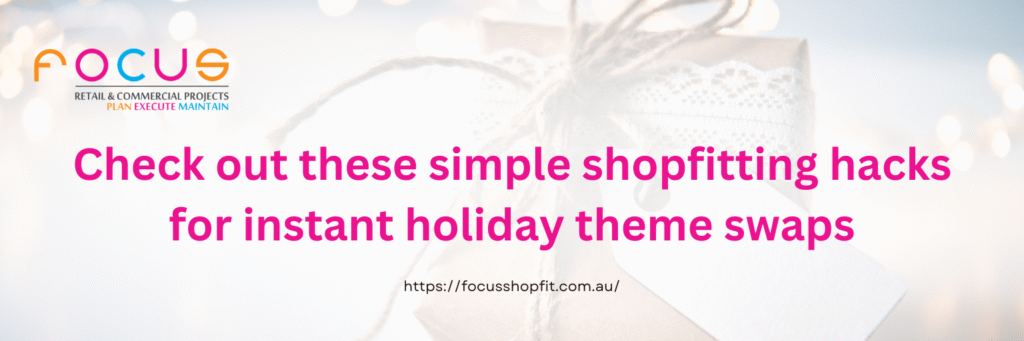
Smart retailers use simple, versatile shopfitting hacks to execute instant theme swaps. This agility allows you to refresh displays, manage traffic flow, and push the right products at the right time.
The magic of modular displays
Your most valuable asset for flexibility is your display system. If you are still relying on heavy, fixed shelving, you are actively slowing down your sales process. Modular retail shelving, like slatwall or mobile gondolas, is the backbone of quick-change retail.
These systems allow floor layouts to be reconfigured overnight, or even during a quiet hour. For example, the open-plan area you used for large, high-traffic "doorbuster" pallets during Black Friday can transform. By adding small modular risers and tiered shelving, it becomes a high-density, multi-product gift destination for the mid-December rush. Once Christmas is over, those same units can be wheeled into a prominent ‘Clearance Zone’ and stacked high with sale items, ready to handle the Boxing Day crowds.
Tip: Invest in castors with heavy-duty locks for all your gondolas and mobile display tables. This allows one person to reposition entire sections of the store quickly and safely, without calling in a large team.
Lighting and signage for an instant atmosphere flip
Physical fixtures are only half the battle, while atmosphere completes the mood. The fastest way to signal a new theme or event is through lighting and dynamic signage.
For a dramatic change from Christmas warmth to Boxing Day clearance, adjust your retail track lighting. Switching from warm, ambient spotlighting (used to highlight premium gifts) to brighter, cooler white light (used to illuminate prices and volume displays) instantly gives the space a high-energy, clearance feel.
Use digital screens instead of printed posters wherever possible. A single click can change a window display promoting "Festive Family Deals" to one yelling "Massive 50% Off Sale," saving hours of effort and environmental waste associated with printing and mounting paper signage.
Tip: Group your lighting onto different circuits. This allows you to dim or intensify specific zones—such as promotional areas or the queue line—to subtly direct customer flow and mood.
"Plug and play" branding
To truly master the quick-change retail shopfit, you need a system for branding that doesn't require complex removal. Look for shopfitting that incorporates "plug and play" features.
- Magnetic overlays: Use custom-printed magnetic sheets that adhere directly to the front of metallic shelving, cash registers, or kick plates. You can swap out a decorative Christmas pattern for a stark "Sale" graphic in seconds.
- Simple clip frames: Install sleek, permanent wall-mounted clip frames in high-traffic areas. These allow staff to slide in new seasonal graphics, menus, or pricing guides instantly, eliminating the need for drills or complex mounting.
- Repurpose existing fixtures: That beautifully stained wooden table that hosted your advent calendar collection? By simply throwing a high-contrast red or yellow vinyl tablecloth over it, it becomes an eye-catching pedestal for end-of-season impulse buys.
By prioritising versatility and minimal effort in your store's design, you save valuable staff time during the busiest period of the year. This ensures your store is always visually aligned with the current campaign, capturing every potential sale as the Australian summer retail marathon continues. Contact Focus Shopfit today for all your shopfitting needs.
Designing for dwell time: Creating a 'cool zone' retreat in hot Australian summer stores
The Australian summer is a brilliant time for retail, but the soaring temperatures and punishing sun present a unique challenge: how do you get customers off the bitumen and keep them browsing, not bolting? The answer lies in transforming your retail space from a mere point of transaction into a genuine "cool zone" retreat. This strategy, driven by intelligent shopfitting and design, is crucial for increasing dwell time and boosting sales in the heat.

Forget fighting the heat. Your design needs to offer an escape. By focusing on sensory merchandising and smart thermal management, you can create a desirable micro-climate that makes customers want to stay, linger, and ultimately spend.
The sensory oasis: Cooling the customer from the inside out
Effective retail design in a hot climate goes beyond the air conditioner. Leveraging sensory cues to make the customer feel cooler and more relaxed the moment they step inside is key.
- Visual cooling: Use light, reflective colours and materials. White, cool blues, and pale greens visually signal freshness and coolness. Feature high-gloss, sleek surfaces like polished concrete or light timber floors, which feel less heavy and heat-absorbing than dark carpet. Your shopfitter should prioritise light fixtures that mimic natural, bright light without the heat output, such as high-CRI LED retail track lighting.
- Aural calm: Replace fast-paced, high-energy music with softer, lower-tempo tracks. Ambient sounds or music with a coastal or natural theme can subconsciously drop a customer's heart rate, making the environment feel less frantic and hot.
- Olfactory freshness: Introduce subtle, non-overpowering scents. Avoid heavy vanilla or spice fragrances often used in winter. Instead, opt for light, fresh, and slightly citrus or minty aromas, which are psychologically linked to cleanliness and cool air.
Tip: Near the entrance, set up a small, temporary water display (like a water feature or simply a well-merchandised cooler of bottled water) with a gentle, running sound to enhance the sensation of immediate relief.
Micro-zoning for thermal comfort
Not every part of your store needs to be Antarctic cold. Smart shopfitting and design uses micro-zoning to create specific, targeted areas of comfort that encourage longer stays in high-value zones. Identify a mid-store lounge area—perhaps near fitting rooms or product demonstration zones—and designate it as the primary cool zone. By creating this intentional decompression area where customers can pause and reset, you are giving them a reason to stay in your store longer, which directly correlates to a higher likelihood of purchase.
Here, you can strategically augment the cooling experience:
- Fans and airflow: Use well-placed, quiet ceiling or pedestal fans to create a noticeable, gentle breeze. Even if the temperature is stable, increased air movement makes customers feel 2-3 degrees cooler.
- Comfort seating: Install comfortable, wide seating in materials that don’t retain heat, such as rattan or light canvas. Offer power points for phone charging—a powerful incentive to increase dwell time.
- Hydration stations: Partner with a local beverage supplier or café to offer complimentary (or low-cost) chilled water or small, icy treats. This simple hospitality act immediately improves the shopping experience.
Preventing the heat trap of display materials and placement
In the height of summer, traditional displays can become literally hot to the touch, deterring interaction.
- Material selection: Avoid dark metals or thick glass near sunny windows. Use modular retail shelving built from lighter materials that won’t absorb and radiate heat.
- Window shading: Implement adjustable shading solutions, like internal sheer blinds or retractable awnings, to block the harsh afternoon sun without sacrificing natural light. Your retail design should use the window for attraction, but not as a source of uncomfortable radiant heat inside the store.
- Product protection: Rotate stock away from direct sun exposure to prevent colours from fading and protect sensitive items (like cosmetics or food) from damage.
By designing your space to actively counteract the harsh Australian summer, you convert a potential barrier (the heat) into a competitive advantage, establishing your store as the comfortable, refreshing retail haven in the neighbourhood. Contact Focus Shopfit to find out more about how we can help you maximise dwell time for your store through flexible shopfitting.
Fire safety and festive crowds: Compliance checks your Australian shopfitter must complete before December
The Australian Christmas shopping rush brings two things in equal measure: massive sales opportunities and significant risk. With foot traffic surging through November and December, the risk of fire and crowd-related incidents skyrockets. Before you hang the last of the decorations, your shopfitter must complete a rigorous compliance audit to ensure your store is not only ready to sell but is legally safe.
Ignoring fire and safety regulations in a high-density period isn't just a compliance issue; it’s a threat to staff, customers, and your entire business. Here are the essential fire safety and crowd management checks your retail fitout must pass before the December peak.
Exit path clearance and access
In the frenzy of restocking and visual merchandising, it’s easy for boxes, display units, and seasonal signage to creep into exit routes. This is a massive compliance fail. Your shopfitter must verify that all designated paths of travel to fire exits are completely clear and maintained at their minimum required width, as stipulated by the Building Code of Australia (BCA).
A common hazard is the use of temporary floor displays, often placed to maximise impulse sales. While these are profitable, they must not obstruct the direct route to the nearest exit. All fire exit doors must be fully operational, easy to open, and not locked, chained, or obscured by festive decorations or bulky stock. This is non-negotiable for retail fire safety.
Tip: Use floor markings or brightly coloured tape to define the minimum clear width of your fire exit pathways. Train all staff to immediately remove any stock or fixtures encroaching on this zone.
Display material fire rating
Your stunning Christmas displays—from fabric backdrops and large foam props to synthetic garlands—could be a significant fire hazard if they aren't properly rated. In Australia, many regulations require that materials used in high-traffic commercial spaces meet specific flammability standards.
Before decorating, insist that your shopfitter provides certificates proving that major decorative materials, particularly those near lights or heat sources, are flame-retardant or non-combustible. Placing highly flammable materials near electrical Christmas lights or heat vents is an unnecessary risk that can quickly lead to a disaster, compromising your commitment to retail fire safety.
Tip: Opt for natural materials like wood and metal over large amounts of paper or synthetic fabrics. If you must use fabric, treat it with a certified fire-retardant spray and keep it away from all electrical sources.
Electrical load and appliance safety
Christmas lights, digital screens, extended operating hours, and temporary POS stations all put an enormous strain on your store's existing electrical infrastructure. An overloaded circuit is a common cause of electrical fires, and this is a key compliance check your shopfitter must oversee.
Before December, they should:
- Ensure all temporary wiring for lights and displays is secured and not running under carpets or across pathways where it could be damaged or tripped over.
- Verify that power boards and extension leads are not overloaded. No piggybacking.
- Confirm that all electrical appliances, including string lights and feature displays, have the required Australian regulatory compliance mark (RCM).
A full electrical safety audit should be considered an essential part of your pre-December preparation, ensuring maximum fire safety compliance.
Visibility and accessibility of fire equipment
When the store is packed with shoppers and seasonal displays, it’s easy for fire extinguishers, fire hose reels, and alarm call points to become hidden. Your fitout plan must ensure that all essential firefighting equipment is clearly visible, easily accessible, and clearly signed.
Make sure nothing is stacked in front of or hanging over your extinguishers. All staff must be trained in the location and correct use of this equipment, especially the temporary seasonal hires who may be unfamiliar with your layout. Your store’s compliance depends on it.

By tackling these four critical checks now, you protect your business, your staff, and your customers, allowing you to focus on selling through the season with confidence. Get in touch with Focus Shopfit for all your shopfitting needs in Australia.
4 shopfitting secrets to Australia's most profitable Christmas displays
The countdown to the Australian Christmas season is on. Unlike our Northern Hemisphere counterparts, this peak trading period is defined by scorching heat, beach holidays, and a compressed sales cycle starting with Black Friday. To create a display that doesn't just look festive, but actually drives maximum sales, retailers need to master the art of the flexible retail fitout.

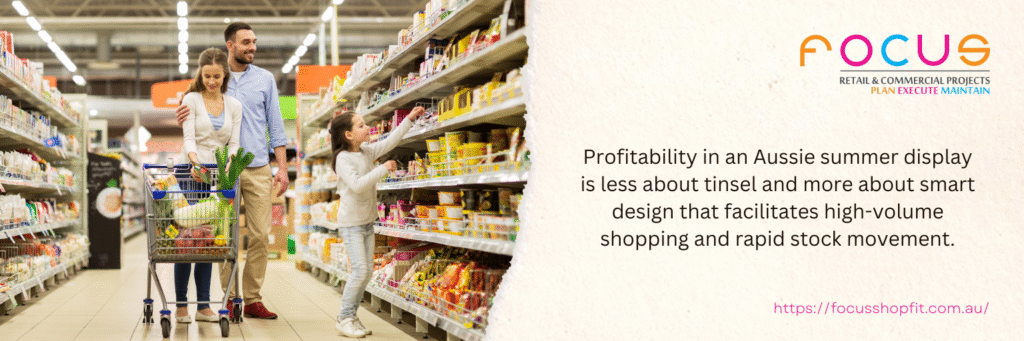
Profitability in an Aussie summer display is less about tinsel and more about smart design that facilitates high-volume shopping and rapid stock movement. Here are the shopfitting secrets that turn your retail space into a Christmas cash register.
- Master the rule of three or profit pyramid
The single most effective visual merchandising strategy for high-volume sales is the rule of three, or pyramid principle, expertly facilitated by a smart modular display system. Instead of lining up products in monotonous rows, profitable displays group products in odd numbers (three, five, seven) and at varying heights, creating a natural focal point that attracts the eye.
Use low, high-end shop display cabinets near the window for feature gifts, stepped risers on gondolas for mid-priced items, and simple floor stacks for high-volume impulse buys. This layering of height and price guides the customer's journey and encourages them to trade up or add on. When Black Friday hits, these flexible systems allow you to swap a high-end gift theme for a "Deal of the Day" stack in minutes.
Tip: Always place your highest-margin item at the peak of your three-tiered display. Use contrasting colours or a small accent light to make it instantly stand out.
- Use high-CRI lighting to make the product sparkle
In the intense Australian summer light, standard store lighting can make products look washed out or dull. Australia's most profitable displays leverage high-quality lighting to enhance product colour and texture, which is critical for gift appeal.
Invest in LED retail track lighting with a high Colour Rendering Index (CRI of 90+). This type of lighting accurately reflects true product colours, preventing that dreaded return trip because the item "looked different in the store."
For summer apparel and homewares, use a cooler white light (around 4000K-5000K) to give the store a fresh, airy feel that counteracts the heat outside. For premium gifts like jewellery or gourmet food, use narrow-beam spotlights to create a dramatic, sparkling effect that highlights exclusivity.
A good shopfitter will ensure your lighting is adjustable and focused entirely on the merchandise, not the floor, maximising the visual draw of your hero products.
- Capitalise on queuing
During the peak retail period, a queue at the checkout is inevitable. Instead of viewing it as a bottleneck, see it as a final, captive sales opportunity. Profitable retailers use their fitout to transform the queue path into a high-converting impulse island.
This requires a dedicated area featuring a modular display system near the POS. These should be small, quick-to-assemble fixtures loaded with low-cost, high-margin, seasonal items: bonbons, novelty socks, small beauty packs, or gourmet treats. Because the customer has already committed to buying, these impulse items act as a simple add-on purchase.
Tip: Stock this area with items below $30. Ensure clear, bold price signage is visible from the line to facilitate quick, no-thought purchases.
- Design for dual seasons: Heat and hype
Unlike the northern winter, Australians shop for two distinct seasons simultaneously: gifts for Christmas and gear for summer holidays. Your shopfitting must accommodate both. Use lightweight, flexible retail fitout elements—like wire baskets or nesting tables—to group related, non-Christmas items (sunscreen, towels, BBQ gear) near seasonal impulse zones. This acknowledges the reality of the Aussie summer and increases basket size beyond traditional Christmas goods. By investing in an agile, high-impact flexible retail fitout, you ensure your store is ready to handle the unique pace, traffic, and climate of Australia's hottest and most profitable retail season.
Ready to transform your summer sales? Take the next step towards a record-breaking summer. Contact Focus Shopfit if you’d like a checklist to audit your retail store.